
2026 Top Gas Generator Types for Global Buyers?

Choosing the right Gas Generator in 2026 requires more than comparing rated kilowatts. Global buyers must examine fuel availability, operating climate, maintenance access, emissions performance, and total ownership cost. As energy historian Daniel Yergin has said, “Energy is the lifeblood of modern society.” That principle remains practical when a hospital, factory, or remote worksite depends on continuous power.

This guide reviews the leading gas generator types for international applications. It considers natural gas units, biogas generators, dual-fuel systems, standby models, portable sets, and combined heat and power configurations. Each type serves a different operating reality. A pipeline-connected factory may prefer a high-efficiency natural gas engine. A wastewater plant could recover value from biogas. A construction site may need mobility more than maximum efficiency.

Look beyond brochure figures. Check methane quality, gas pressure, altitude derating, noise levels, spare-parts support, and local grid conditions. A 500 kW unit can perform differently at a hot, dusty site than in a controlled test facility. Small details matter. So do service response times.

No ranking fits every buyer. That is the uncomfortable part. Fuel prices change, regulations evolve, and renewable power may alter future demand. Some comparisons also rely on manufacturer data rather than long-term field records. Buyers should verify claims with site measurements, maintenance histories, and independent technical reviews. This introduction provides a practical framework, but it cannot replace an engineered feasibility assessment.
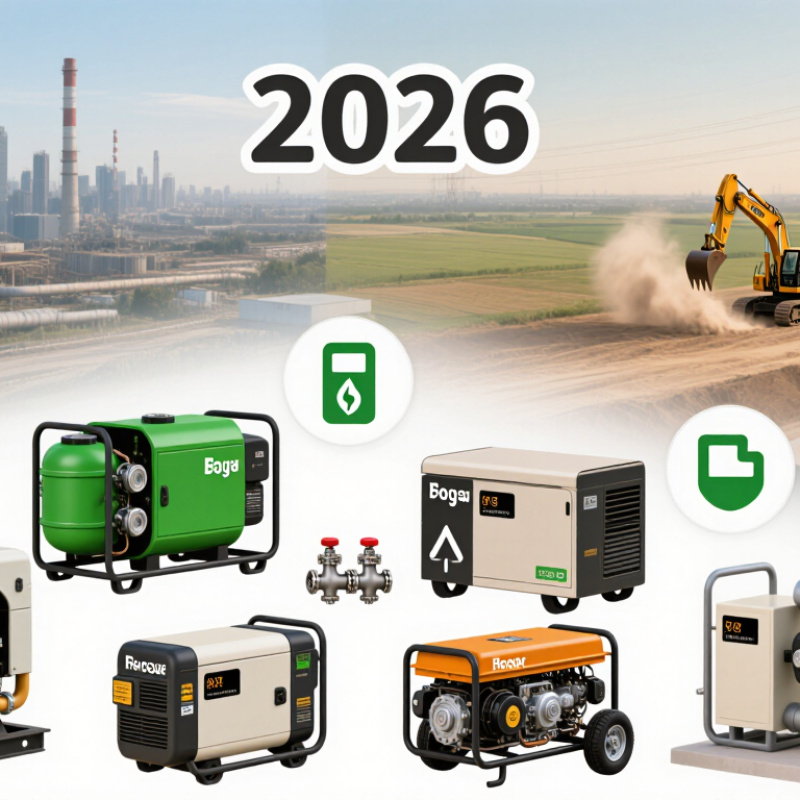
2026 Top Gas Generator Types for Global Buyers?

What Is a Gas Generator and How Does It Work?

A gas generator produces electricity by burning a gaseous fuel inside an internal combustion engine. Common fuels include natural gas, propane, and treated biogas. The engine turns a shaft connected to an alternator. The alternator then converts mechanical rotation into electrical power.

The process begins when air and fuel enter the combustion chamber. A spark ignites the mixture, creating expanding gases that push the piston downward. This movement drives the crankshaft and alternator. A voltage regulator helps keep the electrical output stable as demand changes. It works quickly, but not perfectly.

Natural gas generators suit sites with pipeline access and steady fuel supply. Propane models offer easier storage for remote facilities. Biogas generators can use waste-derived fuel, although moisture and impurities may reduce engine life. Dual-fuel systems provide flexibility, but their controls and maintenance can be more demanding.

In practical installations, ventilation matters as much as engine size. Exhaust must discharge safely away from occupied areas. Technicians should check fuel pressure, grounding, noise, temperature, and local electrical codes. A generator can appear powerful on paper yet struggle with motor starting currents. That detail is often overlooked. Load testing under realistic conditions gives buyers more reliable information than a simple idle test. Fuel quality, altitude, and seasonal temperature also influence performance. Real sites are messier than diagrams.

2026 Top Gas Generator Types for Global Buyers

What is a gas generator and how does it work? A gas generator converts the chemical energy of gaseous fuel into electricity through combustion or electrochemical conversion. The chart compares representative net electrical-efficiency ranges for major gas-based generator technologies.

Values are indicative typical ranges under suitable operating conditions. Actual efficiency depends on generator size, load factor, ambient conditions, fuel quality, and whether heat is recovered for combined heat and power.

Which Gas Generator Types Will Lead Global Markets in 2026?

In 2026, natural gas generators are likely to lead global markets where pipeline networks and liquefied gas supplies remain dependable. They offer stable power, lower local emissions than diesel, and strong performance for hospitals, factories, and data centers. High-efficiency models will attract buyers facing rising fuel costs. However, cleaner operation still depends on methane control and responsible fuel sourcing.

Dual-fuel generators may expand faster in regions with uncertain gas availability. They can switch between natural gas and liquid fuel when pressure drops or deliveries are delayed. That flexibility matters. Operators also gain time during grid failures. Yet, dual-fuel systems usually require more careful maintenance, trained technicians, and precise fuel management. Buyers should examine actual load profiles instead of trusting advertised peak output.

Biogas generators will gain attention near farms, wastewater plants, and food-processing sites. These units can convert local organic waste into useful electricity and heat. Combined heat and power systems may lead projects with steady thermal demand. Still, gas quality varies, and poor cleaning can damage engines. I have seen project plans assume continuous feedstock, although seasonal supply often changes. That weakness deserves honest review.

Containerized and modular gas generators could serve expanding industrial zones and remote infrastructure. Their smaller blocks simplify staged investment and maintenance. Hybrid systems with batteries may also reduce inefficient low-load running. The market will not choose one universal design. Fuel access, service skills, noise limits, grid stability, and long-term operating costs will decide which generator types succeed in each region.

How Do Gas Generator Types Differ in Design and Performance?

How Do Gas Generator Types Differ in Design and Performance?

Gas generators differ mainly in engine architecture, fuel flexibility, and heat management. Reciprocating gas engines use pistons and crankshafts, making them responsive to sudden loads. The U.S. Department of Energy’s Catalog of CHP Technologies reports electrical efficiencies of roughly 28% to 42% for these engines. They suit hospitals, factories, and backup systems that cycle frequently. Their compact frames help installation, but vibration and maintenance can increase with operating hours.

Gas turbines use continuous combustion and high-speed rotating components. They need cleaner airflow and stable gas pressure. According to the same DOE report, larger turbine systems commonly achieve about 26% to 40% electrical efficiency. They perform better under steady loads and can produce useful exhaust heat. A turbine room often feels different: louder airflow, hotter exhaust ducts, and fewer moving parts.

Microturbines are smaller and usually offer simpler modular installation. DOE data places their electrical efficiency near 25% to 33%, depending on size and recovery design. They can work well in distributed energy projects, but their efficiency may fall during partial loading. That detail is often missed. In real facilities, demand rarely stays constant. Gas quality, altitude, ambient temperature, and maintenance discipline can change results more than brochure figures suggest. Performance testing on site remains essential.

Where Are Different Gas Generators Used Worldwide?

Gas generators serve different roles across global power systems. Natural-gas units commonly support hospitals, factories, and commercial buildings in urban regions. They offer fast backup during grid interruptions, especially where reliable gas pipelines exist. The IEA’s Electricity 2024 report projects data-center electricity demand will exceed 1,000 TWh globally by 2026. This growth is increasing interest in onsite generation and microgrids. Yet, not every facility should install a gas generator. Pipeline pressure, local emissions rules, and emergency runtime can change the decision.

Remote regions need different equipment. LPG generators are practical for temporary sites, islands, and areas without gas pipelines. Dual-fuel systems can serve mines, construction projects, and weak-grid communities when fuel availability changes. Biogas generators operate at wastewater plants, farms, and landfill facilities, converting locally produced gas into electricity. According to the World Bank’s Tracking SDG7: The Energy Progress Report 2024, nearly 685 million people lacked electricity access in 2022. In these locations, generators may support clinics, telecom towers, or water pumps. Small systems matter.

Fuel quality remains a practical weakness. Poor maintenance can reduce efficiency and shorten engine life. Gas supply can also fail during extreme weather. Project teams should test actual fuel pressure, load profiles, and service access before choosing a generator type. That step is often skipped.

How Should Global Buyers Select the Right Gas Generator?

Selecting a gas generator for 2026 requires more than comparing rated kilowatts. Buyers should match the generator type to load behavior, gas quality, climate, and service access. Spark-ignited reciprocating units suit stable natural-gas supplies and frequent starts. Lean-burn designs can reduce fuel use, but they may respond poorly to fluctuating methane content. Dual-fuel units offer resilience where pipeline gas is unreliable, although their controls and maintenance are more demanding.

Load data should guide the decision. Record running load, motor-starting current, peak demand, and expected growth for at least twelve months. A unit operating continuously near 90% load may age faster than expected. Oversizing also creates problems. Light loading can increase deposits and reduce efficiency. The U.S. Energy Information Administration reported that natural gas produced about 43% of U.S. utility-scale electricity in 2023, showing its continuing grid role, but local infrastructure still matters. Gas pressure, pipeline capacity, and emergency shutoff requirements must be checked before purchase.

Environmental performance deserves equal attention. The International Energy Agency’s Global Methane Tracker 2024 estimated that fossil-fuel operations released around 120 million tonnes of methane in 2023. Buyers should request verified methane controls, exhaust data, and test methods. ISO 8528 performance ratings help compare generator sets, but they do not replace site testing. Field commissioning often reveals unexpected issues, such as undersized gas regulators or weak cooling airflow. Budget for those realities. A lower purchase price can become expensive when spare parts, trained technicians, and remote monitoring are unavailable.

2026 Top Gas Generator Types for Global Buyers? - How Should Global Buyers Select the Right Gas Generator?
Gas Generator Type Typical Electrical Output Typical Electrical Efficiency Fuel Compatibility Starting and Load Response Key Advantages Main Limitations Best-Fit Applications Important Buyer Checks
Natural-Gas Reciprocating Engine Generator Approximately 50 kW to 10 MW per unit About 30%–45%, depending on engine size, load, and operating conditions Pipeline natural gas, compressed natural gas, and in some cases liquefied natural gas after vaporization Fast start-up; generally strong part-load and load-following performance High power density, modular installation, good operational flexibility, and broad service availability Vibration, exhaust emissions, routine maintenance, and efficiency reduction at very low load Commercial buildings, data centers, hospitals, industrial plants, microgrids, and standby or prime-power systems Gas pressure and methane number, emissions limits, altitude, ambient temperature, noise, maintenance intervals, and required redundancy
Biogas or Landfill-Gas Engine Generator Approximately 100 kW to 5 MW per unit About 30%–42% electrical efficiency after appropriate gas conditioning Biogas commonly containing approximately 50%–70% methane; landfill gas may have variable methane and contaminant levels Moderate to fast response; performance depends heavily on stable gas flow and gas quality Uses locally produced renewable gas and can reduce waste-gas flaring while providing dispatchable power Hydrogen sulfide, moisture, siloxanes, particulates, and variable methane content can increase maintenance and reduce engine life Wastewater treatment plants, agricultural digesters, food-processing sites, and landfill-energy projects Gas cleaning system, siloxane and hydrogen-sulfide limits, moisture removal, methane concentration, flare or backup-gas arrangements, and local renewable-energy rules
Dual-Fuel Gas Generator Approximately 1 MW to 20 MW per unit About 35%–46% when operating mainly on gas, subject to engine design and load Natural gas as the primary fuel with diesel or another liquid fuel available for backup or ignition support Fast response and improved fuel-security flexibility; transfer behavior depends on the control system Maintains power availability where gas supply may be interrupted and supports sites with limited gas infrastructure Higher system complexity, liquid-fuel storage requirements, additional emissions controls, and more complicated maintenance Remote facilities, critical infrastructure, industrial plants, islands, and regions with unreliable gas networks Fuel-switching time, backup-fuel autonomy, storage regulations, emissions in each operating mode, black-start capability, and fuel-quality requirements
Industrial Gas Turbine Generator Approximately 1 MW to more than 300 MW per unit About 25%–40% in simple-cycle operation; higher system efficiency is possible when integrated with heat recovery or combined-cycle equipment Pipeline natural gas, liquefied natural gas after vaporization, and selected treated gaseous fuels Slower start and weaker part-load efficiency than reciprocating engines, although modern systems can provide flexible operation Large continuous output, low vibration, compact footprint relative to power capacity, and suitability for high-temperature heat recovery Performance is sensitive to ambient temperature and elevation; high-quality gas supply and specialized maintenance may be required Utility-scale generation, large industrial sites, district-energy systems, and combined-cycle power plants Annual operating hours, ambient derating, minimum stable load, ramp rate, exhaust-temperature needs, inlet filtration, fuel pressure, and heat-recovery requirements
Microturbine Generator Approximately 30 kW to 500 kW per module; multiple modules can be paralleled About 25%–33% electrical efficiency; total CHP efficiency can be substantially higher with useful heat recovery Natural gas, biogas, and some treated low-pressure gaseous fuels, subject to the manufacturer’s fuel specifications Generally smooth operation and good modular scalability; response is typically slower than a small reciprocating engine Low vibration, compact packaging, relatively low routine maintenance, and useful high-temperature exhaust for heat recovery Lower electrical efficiency at small scale, sensitivity to gas quality, and potentially higher cost per kilowatt Hotels, retail facilities, telecommunications sites, small commercial buildings, and distributed-energy projects Electrical-load profile, heat demand, gas pressure, fuel contaminants, acoustic requirements, inverter and grid-protection functions, and module redundancy
Gas Engine CHP Generator Approximately 50 kW to 10 MW per engine; larger plants can use multiple units About 35%–45% electrical efficiency; approximately 70%–90% total efficiency when recovered heat is effectively used Natural gas, biogas, and other treated gaseous fuels compatible with the selected engine Fast electrical response with continuous operation possible when both power and heat loads are well matched High overall fuel utilization, lower purchased electricity and heating demand, and potential resilience during grid interruptions Economic value declines when recovered heat cannot be used; requires thermal integration, heat exchangers, and additional controls Hospitals, universities, food processing, district heating, greenhouses, hotels, and manufacturing facilities with steady heat demand Hourly heat-to-power ratio, hot-water or steam temperature, seasonal heat demand, thermal storage, export rules, and backup heat arrangements
Containerized Gas Generator Set Approximately 100 kW to several MW per containerized module Typically similar to the enclosed engine or turbine technology used inside the package Usually natural gas; biogas and dual-fuel configurations are available when the package includes suitable treatment and controls Depends on the internal prime mover; factory integration can simplify deployment and commissioning Fast site installation, weather protection, easier transport, modular expansion, and simplified project packaging Transport dimensions, ventilation, acoustic control, fire protection, and service access may limit site choices Temporary power, construction sites, remote communities, emergency power, mining, and modular microgrids Container dimensions, lifting points, cooling performance, local fire codes, ventilation, noise limits, site elevation, and logistics route
Selection principle: Global buyers should compare the generator against the complete project profile rather than rated output alone. The most important inputs are required operating hours, peak and average load, gas composition and pressure, local emissions regulations, ambient conditions, heat demand, grid-parallel requirements, fuel-security needs, service capability, and total life-cycle cost.