
What Is the Best Alternating Pressure Mattress in 2026?
An Alternating Pressure Mattress can reduce prolonged loading by changing inflation across its air cells. But choosing one is not as simple as comparing pump noise or price. The right option depends on mobility, skin condition, comfort, and the care setting. AHRQ has cited estimates that pressure injuries affect about 2.5 million U.S. patients each year, with annual costs estimated at $9.1–$11.6 billion. These figures show why prevention matters, though they do not prove that one mattress works best for every person.
Wound-care specialist Dr. Joyce Black has emphasized the importance of matching prevention strategies to an individual’s risk and clinical needs. That principle matters here: an alternating system is one part of a care plan, not a substitute for regular skin checks, repositioning when appropriate, and professional assessment. Look closely at practical details. Does the pump maintain steady airflow? Can the controls be understood at bedside? Does the surface feel stable when someone sits on the edge? Small annoyances count. A mattress that disrupts sleep or is difficult to operate may be a poor fit, even if its specifications look impressive.
This 2026 guide compares mattress types, pressure settings, comfort, noise, durability, and value. It also separates useful evidence from marketing claims. The evidence is not perfect, and “best” will vary by patient and caregiver. That is worth keeping in mind.
What an Alternating Pressure Mattress Is and How It Works
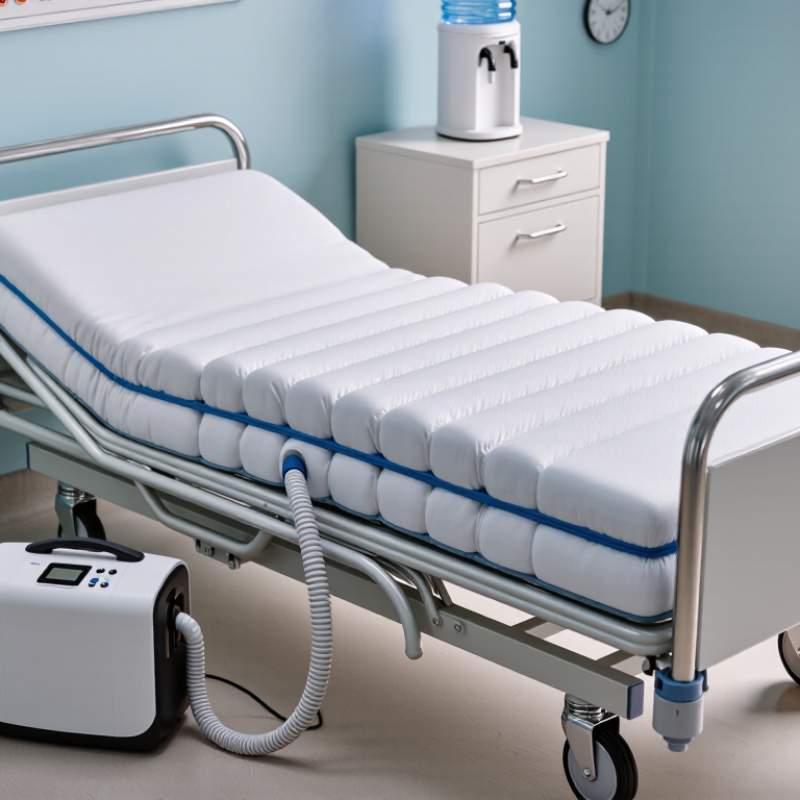
An alternating pressure mattress uses rows of air cells connected to a small electric pump. The pump changes which cells are inflated and which are softened, usually in a repeating cycle. This gently shifts support beneath the body rather than leaving pressure on the same spots for long periods. You may feel a subtle rise and fall. It is not a dramatic motion.
By redistributing pressure, the mattress may help reduce prolonged loading on areas such as the heels, hips, and tailbone. It does not remove pressure completely or guarantee that a pressure injury will be prevented. Skin checks, movement, and an individual care plan still matter. The right cycle and firmness can depend on a person’s mobility, comfort, and health needs.
The pump needs power and may produce a steady hum. Some people notice the changing support at night; others barely do. The trade-off is real. A mattress that feels helpful to one person may feel unstable or uncomfortable to another. Check that the system fits the bed and that its controls are easy for the caregiver to reach. A clinician can help assess whether this type of surface suits the person’s needs.
What Is the Best Alternating Pressure Mattress in 2026? — What an Alternating Pressure Mattress Is and How It Works
| Dimension | What It Means | What to Look For |
|---|---|---|
| Mattress type | An alternating pressure mattress uses powered air cells that inflate and deflate in a repeating pattern to redistribute pressure beneath the body. | Choose a system intended for the user’s care needs and compatible with the bed frame. Some products replace the mattress; others are overlays. |
| How alternating works | The pump changes the air pressure in different groups of cells. As one group firms up, another softens, changing which areas support the body. | Check that the pump provides a consistent cycle and that the cells are arranged to avoid gaps in support. |
| Cycle time | Cycle duration is the time taken for the system to complete its pressure-changing sequence. The setting and available cycle options vary by model. | Look for clearly stated cycle settings and follow the manufacturer’s instructions or a clinician’s guidance. |
| Pressure adjustment | Many systems allow the air pressure to be adjusted for the user’s weight and comfort. | Prefer straightforward controls and confirm that the mattress can be set up for the user’s weight range. |
| Static or nursing mode | Some pumps offer a mode that temporarily stops the alternating cycle to provide a more stable surface for care tasks. | Check whether the mode is available, how long it lasts, and how the system returns to alternating operation. |
| Power and backup | The pump needs electricity to maintain and change cell pressure. Performance during a power interruption depends on the system. | Review alarm features, emergency instructions, and any backup or transport provisions before purchase. |
| Fit and dimensions | Mattress size, height, weight capacity, and bed-frame compatibility differ among products. | Measure the bed and check the product’s dimensions, maximum supported weight, and installation requirements. |
| Cover and cleaning | The cover sits between the user and the air cells. Covers differ in breathability, fluid resistance, and cleaning instructions. | Look for a removable, cleanable cover and follow its specified infection-control and care instructions. |
| Noise and comfort | The pump may produce operating noise, and users can have different comfort preferences as cells change pressure. | Consider pump placement, sound information, and whether the user can try the surface or adjust its settings. |
| Care suitability | These mattresses can be part of a pressure-injury prevention or care plan, but they do not replace repositioning, skin checks, or clinical assessment. | Ask a qualified healthcare professional to assess the user’s needs, especially if there are existing wounds or complex medical conditions. |
Selection note: There is no single best alternating pressure mattress for everyone. Features, settings, dimensions, and performance vary by product; confirm specifications with the manufacturer and seek clinical advice when selecting a mattress for pressure-injury care.