
A Home Car Charging Station can make daily electric driving simpler, but the best choice depends on your vehicle, home wiring, and routine. The International Energy Agency’s Global EV Outlook 2025 reports that electric car sales exceeded 17 million worldwide in 2024, reaching more than one in five new cars sold. That growth makes home charging a practical decision for many households—not just a technical upgrade.
Small details matter. A Level 2 charger may replenish a typical car overnight, but charging speed depends on the vehicle’s onboard charger, circuit capacity, and installation. The U.S. Department of Energy’s Alternative Fuels Data Center explains that charging equipment and vehicle limits shape actual charging performance. A higher advertised kilowatt rating cannot override a car’s own charging limit. Nor does a smart app help much if the Wi-Fi signal fails in the garage. It happens.
This guide compares the features that affect everyday use: charging output, connector compatibility, cable reach, weather protection, smart controls, warranty, and installation requirements. It also considers independent safety certification and the total cost, rather than focusing on a low purchase price alone. No single model suits every driveway. A renter with shared parking has different needs from a homeowner who parks beside a dedicated circuit. The recommendations that follow weigh documented specifications and practical trade-offs, while noting where manufacturer claims need closer scrutiny. A little skepticism is useful.
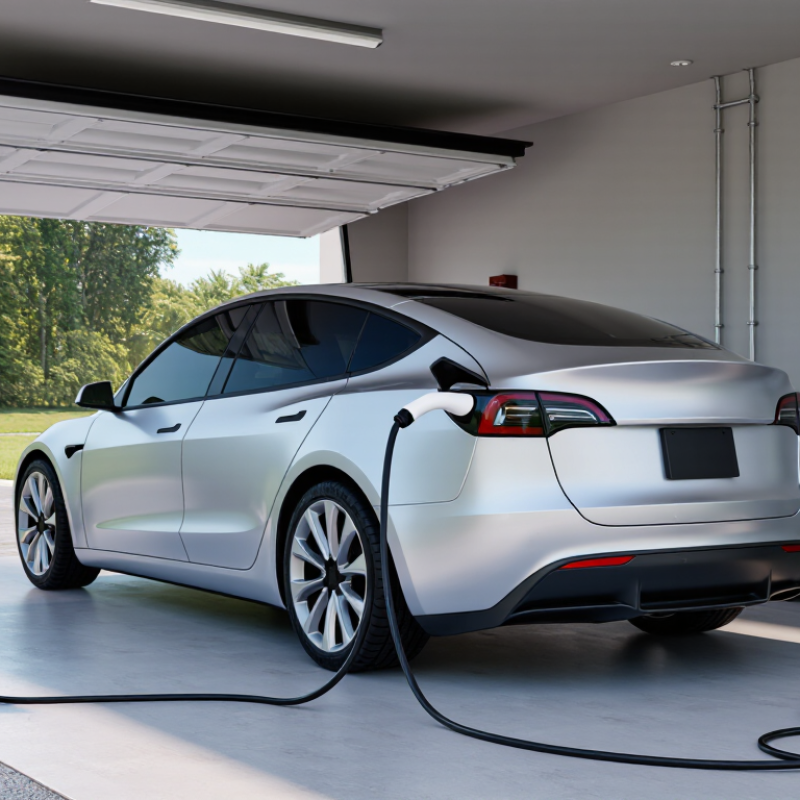
What Is the Best Home Car Charging Station in 2026?
How Home EV Charging Stations Work
A home charging station is more accurately called electric vehicle supply equipment, or EVSE. It does not usually convert household electricity into battery power. Instead, it safely delivers alternating current to the vehicle, whose onboard charger converts it into direct current for the battery. A communication signal checks that the cable is connected and charging can begin. Think of it as a controlled link between your electrical panel and the car. Not magic.
The U.S. Department of Energy’s Alternative Fuels Data Center reports that Level 2 charging typically adds about 10–20 miles of driving range per hour. Actual speed depends on the vehicle, charging equipment, circuit capacity, and temperature. That range is useful, but it is not a promise: a cold evening or nearly full battery can change the rate. Before choosing a station, check your car’s maximum AC charging rate and the available electrical capacity. A qualified electrician can assess the circuit and installation location; a nearby outlet does not automatically mean it can support continuous charging.
Tips: Place the unit close to where the charge port reaches, and keep the cable clear of walkways. Compare charging schedules and energy tracking features only if you will use them. Small detail, big convenience. Recheck the cable and connector periodically for visible wear.
In 2026, the best home charger is not automatically the one with the highest power rating. The International Energy Agency’s Global EV Outlook 2024 projected nearly 17 million electric-car sales that year, showing why reliable overnight charging matters.
Actual speed depends on the vehicle, charger, and home circuit. Match the charger’s output to the circuit an electrician confirms your home can support. More amps are not useful if the vehicle cannot accept them.
Smart scheduling, energy monitoring, and adjustable current can help households avoid peak rates and manage limited electrical capacity. For outdoor installations, check the unit’s weather rating, cable flexibility, and operating-temperature range. Safety certification from a recognized testing organization matters more than a polished app.
Measure the route. A cable that barely reaches the driveway can become a daily annoyance, especially around a parked car or snowbank.
Load management may also prevent an upgrade to the home’s electrical service, but only when properly designed for the household. I would not overvalue remote controls; dependable charging and clear status indicators matter more.
The trade-off is real: extra features can add cost without improving a simple overnight routine.
Before choosing a home charging station in 2026, check your vehicle’s charging port and manual. Connector standards and charging limits vary, even among vehicles that use the same general charging method. A station with a higher power rating will not make a car charge faster than its onboard equipment allows. Check the cable can reach the parking spot without stretching across a walkway. Small detail. Big daily difference.
Electrical capacity matters just as much as vehicle compatibility. A home’s panel may not have enough spare capacity for a high-output charger, especially when heating, cooking, or laundry appliances run at the same time. An electrician can assess the panel, circuit, wiring route, and whether a plug-in or hardwired installation fits the home. Do not assume an existing outlet is suitable; its condition and circuit rating need checking. Installation should follow the equipment instructions and applicable local requirements. Outdoor setups also need equipment rated for the location and a practical way to keep the connector off wet ground. Ask about load management if panel capacity is limited. It may help, but the right setup depends on the home. Even a careful plan can miss a real-world wrinkle, such as a cable that barely reaches after a vehicle is parked.
These figures show approximate AC input power calculated from voltage × current. Actual charging speed depends on the vehicle’s onboard charger and the available electrical supply. EV charging is a continuous load; common electrical codes generally require circuit capacity of at least 125% of the EVSE’s rated current. Have a qualified electrician assess the installation.
What Is the Best Home Car Charging Station in 2026?
Comparing Leading Home Charging Stations by Performance and Cost
Choosing a home charging station means balancing charging speed, installation expense, and daily convenience. Compare units by their maximum power output, but check your vehicle’s charging limit too. A higher-rated station may not charge your car any faster. Your home’s electrical panel matters as well; an electrician can confirm whether it supports the circuit you need. That assessment may change the total cost more than the station’s sticker price.
Look beyond the purchase price. Include installation, cable reach, weather protection, and any required electrical upgrades in your budget. A longer cable can reach a driveway more easily, but it may raise the price. App controls and energy tracking are useful for some households, though not everyone needs them. Pay attention to warranty terms and clear safety certifications. Small details count. A station with impressive specifications is less appealing if its cable cannot comfortably reach your parking spot.
Tips: Measure the distance from the outlet location to your car’s charging port before buying. Ask for an installation estimate based on your actual panel and wiring, not a rough online figure. Compare total installed costs, then weigh them against the charging speed you can use. I would not pay extra for features I rarely expect to touch. Still, household routines change, and that judgment is not perfect.
| Charger category | Maximum output | Typical electrical setup | Estimated charging rate | Typical equipment cost (USD) | Typical installation cost (USD) | Best suited for |
|---|---|---|---|---|---|---|
| Entry-level Level 2 | Up to 7.7 kW (32 A) | 40 A circuit; plug-in or hardwired, depending on the unit | About 20 miles of range per hour | $200–$450 | $300–$900 | Overnight charging, moderate daily driving, or homes with limited electrical capacity |
| Mid-range Level 2 | Up to 9.6 kW (40 A) | 50 A circuit; hardwired or compatible 240 V outlet setup | About 25 miles of range per hour | $300–$600 | $400–$1,000 | Drivers who want faster overnight charging without choosing the highest-power equipment |
| High-output Level 2 | Up to 11.5 kW (48 A) | 60 A circuit; hardwired installation is typical | About 30 miles of range per hour | $400–$800 | $500–$1,200 | Vehicles that support higher AC charging rates and households with suitable electrical service |
| High-output, feature-rich Level 2 | Up to 12 kW (50 A) | Typically a dedicated 60 A circuit; verify the unit’s installation requirements | About 31 miles of range per hour | $500–$1,000 | $500–$1,200 | Drivers who value scheduling, energy tracking, connectivity, or load-management features |
U.S. planning estimates for 2026; actual prices depend on the charger, location, wiring distance, permits, and site conditions. Installation estimates exclude major panel upgrades, which can add substantially to the total. Charging-rate estimates assume roughly 3 miles per kWh and typical charging losses; actual range added varies by vehicle, battery, and temperature. A vehicle’s onboard AC charger may limit charging speed even when the home station has a higher rating.
What Is the Best Home Car Charging Station in 2026?
How to Choose a Charger for Your Home and Driving Habits
The best home charger fits your daily routine, electrical setup, and parking space. If you drive 25 miles most days and park overnight, a Level 2 unit may recharge your car comfortably before morning. The U.S. Department of Energy’s Alternative Fuels Data Center estimates that Level 1 charging adds about 2–5 miles of range per hour, while Level 2 adds roughly 10–30. These are broad estimates, not guarantees; vehicle efficiency, weather, and charging limits affect the result. A faster unit may be unnecessary if your car sits plugged in for ten hours.
Check your car’s maximum AC charging rate before choosing a charger. Also ask a licensed electrician whether your panel can support the circuit you want. Installation costs can change the calculation. A long cable may seem convenient, but it should reach your parked car without crossing a walkway or pulling tight around a corner. Small detail. Yet it matters every day.
Tips: Track your usual mileage for a week, then compare it with your overnight parking time. Choose adjustable output if your household’s electrical capacity is limited. Leave room for an imperfect estimate: cold mornings or an unexpectedly long drive can change your charging needs.
