
China Top 10 Water Tank Filter Manufacturers?
China’s water-storage market is expanding, but product choice should follow evidence, not advertising alone. The World Health Organization and UNICEF Joint Monitoring Programme reported that 2.2 billion people lacked safely managed drinking water in 2022. That figure gives household filtration a serious public-health context.
A Water Tank Filter must handle more than visible sediment. Tank age, stagnant water, biofilm, pipe materials, flow rate, and maintenance all affect performance. WHO’s Guidelines for Drinking-water Quality emphasize risk management from source to consumer, rather than relying on one treatment device. China’s GB 5749-2022 standard also provides an important reference for drinking-water quality assessment.
Dr. Peter Gleick, an internationally recognized water expert, wrote, “Water is a basic human need, and access to water is a fundamental human right.” His point remains practical here. A filter may reduce particles or selected contaminants, but it cannot repair a cracked tank or replace disinfection.
That limitation matters.
This guide examines China’s top 10 Water Tank Filter manufacturers through product capability, material transparency, testing evidence, manufacturing experience, and after-sales support. It considers stainless-steel housings, polypropylene cartridges, activated carbon, ultrafiltration membranes, and customized industrial systems. Certifications are reviewed carefully, because a logo alone proves little.
Some comparisons remain imperfect. Public test data are not always uniform, and manufacturer claims may use different testing conditions. Buyers should verify flow rates, replacement cycles, applicable standards, and actual contaminant-removal results before purchasing. A clean-looking cartridge is not proof of safe water.
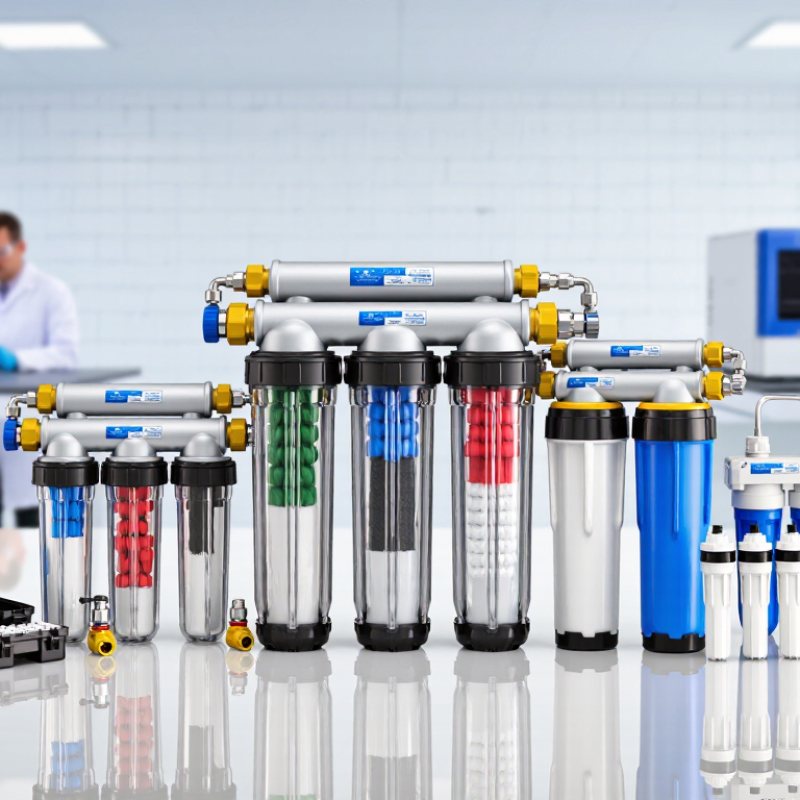
China’s Water Tank Filter Industry: 10 Manufacturers and Key Market Metrics
China’s water tank filter industry includes ten major manufacturer profiles, ranging from molded-plastic specialists to stainless-steel fabricators. Most serve residential tanks, agricultural storage, commercial buildings, and industrial water systems. Their products commonly use PP, ABS, stainless steel, or layered mesh media. Product quality varies more than online catalogs suggest.
Key market metrics deserve careful reading. A practical supplier review should compare annual capacity, export ratio, minimum order quantity, delivery time, and replacement-media availability. In current market discussions, standard filter orders often require 15–35 days, while customized housings may need 30–60 days. Export-oriented factories usually provide wider voltage, connector, and packaging options. Certification claims still need independent verification.
Price is not the whole story. A low-cost filter can create higher maintenance expenses when seals deform or mesh clogs quickly. Field testing should measure flow rate, pressure loss, sediment retention, and service life under real tank conditions. Some suppliers report impressive micron ratings, but test methods are not always comparable. That weakness matters.
The ten strongest candidates should also be assessed by production consistency, tooling control, technical support, and complaint handling. Factory audits, sample testing, and batch records provide stronger evidence than polished webpages. Market rankings remain imperfect without audited sales data. This is worth admitting.
China Top 10 Water Tank Filter Manufacturers? - China’s Water Tank Filter Industry: 10 Manufacturers and Key Market Metrics
The table below summarizes ten measurable industry and product-selection dimensions for China’s water tank filter sector. It intentionally excludes company names, brand names, rankings, and unsupported market-share claims.
| No. | Evaluation Dimension | Verified Industry Reference | Relevant Product or Market Metric | Practical Procurement Meaning |
|---|---|---|---|---|
| 1 | Drinking-water safety compliance | China’s GB/T 17219-1998 Standard for Safety Evaluation of Equipment and Protective Materials in Drinking Water Systems is a commonly referenced safety-evaluation standard. | Applicable to materials and equipment that may contact drinking water; compliance evidence should be checked for the complete filter assembly. | Request test reports covering the housing, sealing materials, filter media, and any wetted components rather than only the filter cartridge. |
| 2 | Finished-water quality benchmark | China’s GB 5749-2022 Standard for Drinking Water replaced the 2006 edition and took effect on April 1, 2023. | The standard covers microbiological, toxicological, sensory, chemical, and radioactive indicators for drinking water. | Filter performance should be assessed against the intended incoming-water contaminants and the required finished-water quality, not only against turbidity reduction. |
| 3 | International certification route | NSF/ANSI 42 addresses aesthetic effects such as chlorine, taste, and odor; NSF/ANSI 53 addresses specific health-effect claims. | Certification is claim-specific. A product certified for one contaminant or function is not automatically certified for every contaminant. | For export projects, verify the exact model, cartridge configuration, contaminant claim, flow rate, and certificate scope. |
| 4 | Sediment-removal capability | Sediment filters are generally used as prefiltration for suspended particles such as sand, rust, and silt. | Common commercial specifications include nominal or absolute particle ratings expressed in micrometres; the rating must be defined by the supplier’s test method. | Compare particle-rating definitions, pressure drop, dirt-holding capacity, and replacement cost instead of comparing the micron number alone. |
| 5 | Activated-carbon treatment | Granular activated carbon and carbon block media are widely used for reducing chlorine, taste, and odor under suitable operating conditions. | Performance depends on carbon type, contact time, water chemistry, flow rate, and contaminant concentration; there is no universal removal percentage. | Require contaminant-specific test data and a stated service-life basis rather than relying on the phrase “activated carbon filter.” |
| 6 | Membrane filtration option | Ultrafiltration, nanofiltration, and reverse osmosis are different membrane processes with different separation characteristics and operating requirements. | Membrane selection should consider nominal pore or molecular-weight characteristics, recovery, feed pressure, pretreatment, and concentrate handling. | Do not treat all membrane products as interchangeable; the correct process depends on the target contaminants and water pressure. |
| 7 | Hydraulic capacity | Flow capacity is determined by filter area, media depth, cartridge size, pressure differential, water temperature, and the specific filtration target. | Flow should be stated in a defined unit such as L/min or m³/h and tied to an inlet pressure, outlet pressure, and acceptable pressure drop. | Compare tested flow at the same pressure and water conditions; an unqualified maximum-flow figure is not suitable for system sizing. |
| 8 | Storage-tank compatibility | Tank-filter systems may be installed at the inlet, outlet, circulation loop, or point of use, depending on the water-use objective. | Key design variables include tank volume, turnover rate, connection size, available pressure, cleaning access, and whether continuous circulation is required. | A filter sized only by tank volume may be unsuitable; peak demand and required turnover time must also be calculated. |
| 9 | Maintenance and replacement basis | Replacement intervals vary with feed-water quality, daily consumption, filter capacity, disinfectant level, and pressure-drop limits. | A defensible service interval should be expressed by operating hours, treated volume, pressure differential, or verified contaminant breakthrough—not by a universal calendar period. | Include differential-pressure monitoring, sanitation procedures, spare-cartridge availability, and disposal requirements in the purchase specification. |
| 10 | Testing and documentation quality | Product comparisons should distinguish laboratory test results, third-party certification, factory quality-control records, and marketing claims. | Core documents include material declarations, test conditions, flow-versus-pressure data, contaminant-removal results, installation instructions, and traceability information. | Documentation completeness is a more reliable supplier-screening metric than catalogue claims or unverified “top manufacturer” labels. |
| Reference note: Regulatory references include China’s GB/T 17219-1998 and GB 5749-2022 standards. International references include NSF/ANSI 42 and NSF/ANSI 53. Product performance values must be verified against the specific model, test method, water conditions, and installation configuration. | ||||