
Choosing among China’s leading Hydraulic Internal Gear Pump manufacturers takes more than comparing catalog prices. Buyers must examine pressure ratings, displacement, speed range, fluid compatibility, noise, and service support. Small differences matter. A pump’s machined clearances and test records can affect efficiency, heat, and operating life.
Fluid-power author John Watton, known for his work on hydraulic control systems, offers a useful engineering lens. A paraphrase of his systems-focused approach is: “Pump performance depends on how well the entire hydraulic circuit is designed and controlled.” That is not a verbatim quotation. It is a reminder that a strong pump cannot compensate for unsuitable oil, poor filtration, or a badly matched motor.
This overview compares ten Chinese manufacturers through practical selection criteria, including product range, technical documentation, customization, quality assurance, and export experience. It also considers what buyers can verify: published specifications, test procedures, certifications, and responsive engineering support. A polished brochure is not enough. Ask for evidence.
The comparison has limits. Manufacturer capabilities change, and public information may not reveal every production detail. Treat the list as a starting point, then confirm specifications against your operating conditions. A careful shortlist can save time. It cannot replace a real technical review.
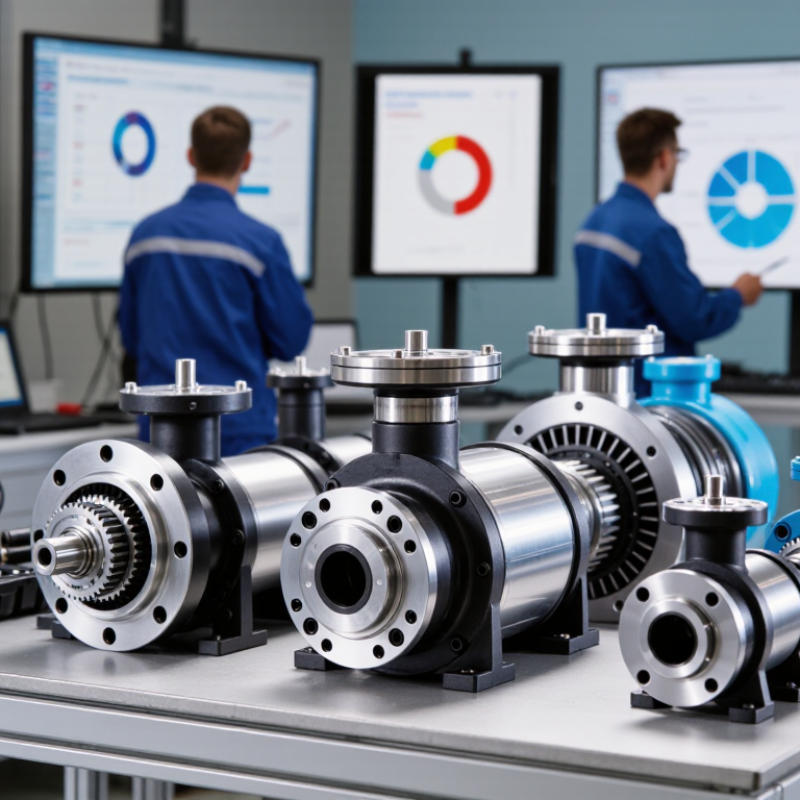
An internal gear pump moves oil through a compact space between two gears. The inner rotor turns inside an outer ring gear, with their teeth engaging off-center. As the teeth separate, small cavities grow on the inlet side. Oil fills these expanding spaces. The rotating gears carry it around the casing toward the outlet. Near the meshing point, the cavities shrink and push oil into the pressure port. This is positive-displacement flow: each revolution moves a relatively consistent volume, though leakage and wear can reduce actual delivery.
Tips: Check the inlet line for restrictions and keep the fluid clean. Trapped air can cause noise, uneven flow, and slow response. Use the pump’s rated speed and viscosity range; a cold, thick fluid can increase inlet losses.
Porting guides fluid into and out of the gear chamber. Inlet and outlet positions depend on the pump design, so correct rotation and connection matter. A reversed connection may cause poor performance or damage. The basic flow path sounds tidy, but real systems are less forgiving: temperature, clearance, and pressure all affect output. A small pressure drop at the inlet can become a noticeable problem under load. Measure operating conditions rather than relying on a catalog description alone.
For a top-ten comparison, displacement alone can mislead. Published industrial pump specifications commonly cover roughly 5–250 cm³/rev, while practical flow depends on speed. At 1,500 rpm, that range represents about 7.5–375 L/min theoretically; actual delivery falls with leakage and operating conditions. Many industrial internal gear designs list working pressures around 250–300 bar, but verify continuous and peak ratings separately. A short pressure spike is not a continuous-duty rating.
Compare volumetric efficiency, ηv, at matched speed, pressure, and oil temperature. It is measured flow divided by theoretical flow. Values around 90–96% are a useful screening range for established designs under rated conditions, not a guarantee across every operating point. ISO 4409:2019 specifies methods for testing and presenting steady-state pump performance, supporting more consistent comparisons. Conditions matter. Ask for test data showing displacement, flow, pressure, speed, fluid viscosity, and temperature together. A catalog figure without those details is weaker evidence. This comparison is imperfect: different test fluids or tolerances can shift results, and buyers sometimes overlook inlet conditions. That deserves a second look.
Calculated flow by displacement at 1,500 rpm and 90% volumetric efficiency. The examples use a constant operating pressure of 150 bar and are not manufacturer specifications.
Flow is calculated as displacement × speed × volumetric efficiency ÷ 1,000. Actual performance varies with pump design, pressure, speed, fluid, and temperature.
China Top 10 Hydraulic Internal Gear Pump Manufacturers?
A useful comparison of China’s leading internal gear pump manufacturers starts with product range, not catalogue size. Check whether each supplier offers fixed-displacement models across several frame sizes, or only a narrow set. Displacement, rated pressure, speed, and flow should be compared at the same operating conditions. Numbers need context. A peak pressure rating is not necessarily suitable for continuous duty. For example, a pump running near its speed limit may deliver less useful flow once oil viscosity and temperature change.
Request rated and maximum values separately, plus the test conditions behind them. Look for compatible fluid-viscosity ranges, inlet-pressure limits, shaft options, and mounting dimensions. These details affect whether a pump fits an existing power unit without adapters or performance compromises. Not always obvious. Product sheets can omit noise, efficiency, or service-life data, so ask for test reports where available. A supplier with fewer models may still suit a specific machine better than one with a broad catalogue. Compare the exact duty cycle: a compact mobile system and a steady industrial circuit place different demands on pressure, speed, and heat management. One specification mismatch can matter. Manufacturers’ stated ratings are useful starting points, but application testing remains important.
Technical reference: The table below summarizes common market screening benchmarks for hydraulic internal gear pumps. It is not a verified ranking and does not assign specifications to individual manufacturers. Actual ratings depend on the specific model, fluid, temperature, and operating conditions; confirm them in the manufacturer’s datasheet.
| No. | Comparison Dimension | Typical Screening Benchmark | What to Check in the Rated Specification |
|---|---|---|---|
| 1 | Pump type | Fixed-displacement internal gear pump; some product families include pressure-balanced designs. | Confirm the design type, displacement-control options, and whether the stated rating is continuous or intermittent. |
| 2 | Displacement | Commercial ranges vary widely; approximately 1–250 cm³/rev is a broad selection reference, not a universal series range. | Compare displacement per frame size and calculate flow at the intended operating speed. |
| 3 | Continuous operating pressure | Many industrial models are rated in the approximate 200–300 bar range; ratings are model-specific. | Distinguish continuous pressure from peak or intermittent pressure, and check the permitted duty cycle. |
| 4 | Maximum speed | A broad screening range is about 1,000–3,000 rpm; allowable speed depends on displacement, viscosity, and inlet conditions. | Check the speed limit at the selected displacement and ensure the pump can be adequately supplied at the inlet. |
| 5 | Flow rate | Flow is determined primarily by displacement and speed; theoretical flow (L/min) = displacement (cm³/rev) × speed (rpm) ÷ 1,000. | Compare rated flow at the stated speed and pressure, not only theoretical flow or a no-load value. |
| 6 | Fluid viscosity | A common hydraulic-oil operating region is roughly 10–400 mm²/s (cSt); the allowable range varies by model and temperature. | Verify the permitted minimum and maximum viscosity at startup and during normal operation. |
| 7 | Operating temperature | Hydraulic-fluid and seal limits are application-dependent; the permissible temperature must be confirmed for the selected materials and fluid. | Check fluid temperature limits, seal compatibility, cold-start conditions, and any derating requirements. |
| 8 | Rotation and shaft configuration | Rotation direction and shaft options are product-specific; a pump should not be assumed reversible unless the datasheet states so. | Confirm rotation viewed from the specified end, shaft dimensions, key or spline form, and coupling requirements. |
| 9 | Mounting and port connections | Common configurations include flange or foot mounting and threaded or flange ports; connection standards differ across product series. | Check mounting dimensions, port size and position, thread or flange standard, and installation clearances. |
| 10 | Efficiency, noise, and cleanliness | Efficiency and noise depend on operating point, installation, and test method; filtration and fluid cleanliness should follow the pump datasheet and system requirements. | Request test conditions for efficiency and noise claims, and confirm filtration guidance and required fluid cleanliness class. |
Selection note: For an apples-to-apples supplier comparison, request datasheets for the same displacement, speed, pressure, fluid, temperature, and test conditions.
When comparing China’s top hydraulic internal gear pump manufacturers, look beyond rated pressure and flow. Ask how each supplier controls cleanliness during assembly and testing. ISO 4406 expresses fluid contamination through particle-count codes at 4, 6, and 14 micrometres. A lower code generally means fewer particles, but the correct target depends on the pump and the whole circuit. Request documented test results and clarify how samples are taken. A clean report is useful, but it cannot prove every delivered unit is equally clean.
ISO 4413 adds a system-safety lens. Check that design documentation addresses pressure limits, relief devices, fluid compatibility, and safe maintenance. Ask how the pump is protected during startup, when cold oil can increase resistance. Look for clear installation instructions and traceable inspection records. Details matter. A small omission in a relief-valve arrangement can create a serious risk. Still, paperwork alone is not enough; practical review of the actual hydraulic circuit is important.
Tips: Set cleanliness targets before ordering. Confirm filtration and flushing procedures, then verify them during commissioning. Record pressure and temperature readings. If a result seems unusually perfect, ask how it was measured.
Choosing among China’s hydraulic internal gear pump manufacturers starts with the machine, not a catalogue ranking. Record the required flow, operating pressure, and shaft speed across the full working cycle. A pump that performs well at steady speed may behave differently during frequent starts or rapid changes in load. Check the supplier’s performance curves at your actual operating conditions, not only its maximum ratings. Details matter.
Oil viscosity changes with temperature, so specify the fluid grade and the coldest expected start. Thick oil can increase starting torque and restrict inlet flow; thin, hot oil can raise leakage and reduce volumetric efficiency. Ask for recommended speed limits across the viscosity range. If the machine runs outdoors, test a cold start rather than relying on a warm workshop trial. A neat spreadsheet can still miss that detail.
Duty cycle matters just as much. A pump used intermittently on a small lifting unit faces different heat and wear demands from one running continuously on production equipment. Share expected hours, pressure peaks, and rest periods when requesting a proposal. Ask what inspection data, spare parts, and troubleshooting support the manufacturer can provide. Ask for evidence. Response time matters when a line stops, but confirm service arrangements in writing and check that technical documents match the supplied model.
