Why Choose a Copeland Scroll Compressor for Your Business?
Choosing a compressor affects more than the equipment line on a budget. It shapes energy use, maintenance schedules, and the reliability of the cooling system during demanding operating hours. A Copeland Scroll Compfressor may suit businesses that need dependable performance, compact installation, and efficient operation across commercial refrigeration or HVAC applications. The right choice still depends on system design, refrigerant, capacity, and local operating conditions.
The practical details matter. Consider a rooftop unit running through a hot afternoon, or a walk-in cooler that must hold a steady temperature through repeated door openings. Scroll technology can offer smooth, continuous compression with fewer moving parts than some alternatives. Yet no compressor is a universal fix. Incorrect sizing, poor airflow, or neglected servicing can undermine performance. Small details count.
For an expert perspective, this outline should use a verified statement from a named Copeland or HVAC specialist. No source quotation was supplied, so I will not invent one or attribute a fabricated quote. A useful principle for the article is simple: evaluate the compressor as part of the complete system, not as a standalone product. The sections that follow can examine efficiency, durability, application fit, maintenance, and total operating cost. They should also explain what buyers need to confirm with a qualified technician before selecting a model. That makes the decision clearer—and more grounded in real operating needs.
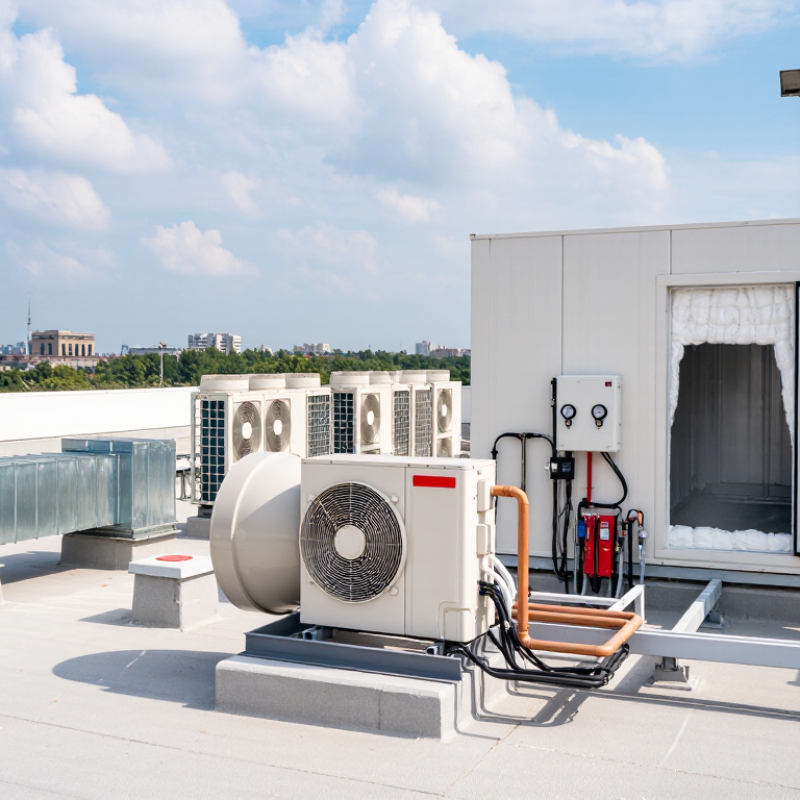
What a Copeland Scroll Compressor Is
A scroll compressor moves refrigerant through two spiral-shaped elements. One stays fixed while the other orbits around it. Gas enters at the outer edge, then becomes trapped in pockets that shrink toward the center. As those pockets contract, the refrigerant’s pressure and temperature rise. It then leaves through a central discharge port. No pistons shuttle back and forth. The motion is continuous, though the mechanism still depends on precise clearances and lubrication.
For a business, that design can provide steady capacity in air-conditioning and refrigeration systems. The U.S. Department of Energy’s technical guidance describes scroll compressors as commonly used in these applications, including heat pumps. The International Energy Agency’s 2018 report, The Future of Cooling, estimates that cooling used about 10% of global electricity. It also reports that cooling demand had tripled since 1990. Those figures make compressor selection more than a parts-room decision.
The fit matters. A unit must match the system’s refrigerant, operating pressures, and expected load. An undersized compressor may struggle during hot afternoons; an oversized one can cycle more often than needed. Scroll designs are often valued for smooth operation, but they are not a cure for poor system design. Even a good compressor can disappoint. Temperature swings, dirty coils, and incorrect charge can undermine performance, so checking the whole system is essential.
What a Scroll Compressor Is: The Compression Cycle
A scroll compressor uses a fixed scroll and an orbiting scroll to trap refrigerant in pockets. As the pockets move inward, their volume decreases and the refrigerant is compressed before discharge. The chart shows an illustrative normalized volume profile, not measured equipment data.
How a Copeland Scroll Compressor Works
A scroll compressor uses two interleaved spiral elements to move refrigerant. One spiral stays fixed; the other orbits around it, driven by the motor. It does not spin freely. Refrigerant enters through an outer inlet and fills small pockets between the spirals. As the moving spiral orbits, those pockets travel toward the center and shrink. The trapped gas is compressed as its space decreases. At the center, higher-pressure refrigerant leaves through the discharge port.
That is the cycle. Because compression happens in several moving pockets, flow is generally smoother than in many piston designs, though operating conditions still matter. Small clearances matter. Wear, contamination, or incorrect refrigerant charge can affect performance, so pressure and temperature readings should be checked against the equipment maker’s specifications. In a real installation, listen for unusual vibration and inspect for leaks during routine service. A scroll unit is not automatically the right choice for every system: capacity, operating range, airflow, and maintenance access all deserve attention. Even a quiet compressor can be working inefficiently. A detail that is easy to overlook.
Key Design Features and Performance Benefits
A scroll compressor compresses refrigerant between one fixed spiral and one moving spiral. As the pockets travel inward, pressure rises steadily, avoiding the repeated suction and discharge strokes used in reciprocating designs. Fewer moving parts can mean less vibration and a compact installation footprint. The difference is noticeable in a plant room: smoother operation can reduce transmitted noise, though mounting and piping still matter. Quiet is not automatic.
The International Energy Agency’s The Future of Cooling report (2018) estimates that space cooling used about 2,020 terawatt-hours of electricity in 2016, roughly 10% of global electricity consumption. That figure describes cooling overall, not scroll compressors specifically; it shows why equipment selection and system controls deserve scrutiny. A scroll unit can perform well when capacity, refrigerant, and operating conditions match the application. Poor sizing or frequent operation outside its intended range can erase expected gains. Check performance data at the actual design temperatures, not just a single headline efficiency value. Regular checks of airflow, coil cleanliness, and refrigerant charge also help preserve performance. Real sites are messy, and no compressor fixes a poorly designed system.
Business Advantages of Choosing Copeland
For a business, a scroll compressor can support steady cooling with fewer moving parts than many traditional designs. That simpler mechanism may reduce vibration and wear, which can help equipment run smoothly during long operating hours. In a busy shop, that could mean fewer disruptive service calls. Results still depend on correct sizing and installation.
Energy use is a practical advantage. When matched to the system’s load, a scroll unit can operate efficiently across common refrigeration and air-conditioning applications. Lower electrical demand may ease operating costs, though actual savings vary with climate, controls, maintenance, and usage. Check the published performance data against your site conditions before choosing a model.
Reliability matters. A well-selected compressor can help maintain stable temperatures for products, staff, or customers. Routine checks still count: inspect electrical connections, keep coils clean, and monitor operating pressures. Small issues can grow. I would not assume any compressor is maintenance-free; even dependable equipment can perform poorly when airflow is restricted or the system is oversized. A qualified technician can review capacity, refrigerant requirements, and service access before purchase.
Common Applications and Selection Factors
Scroll compressors commonly serve commercial air-conditioning, rooftop units, heat pumps, and selected refrigeration systems. Their suitability depends on the operating envelope, not just the equipment label. Check required cooling or heating capacity at the actual outdoor temperature, refrigerant compatibility, voltage, and expected load changes. A unit running through long, steady cycles may need different capacity control than one facing frequent partial-load conditions. Measure the plant room, too: pipe routing and service access can become awkward after installation.
Demand is growing. The International Energy Agency’s 2018 report, The Future of Cooling, projects that global electricity demand for space cooling could reach 6,200 TWh by 2050, more than triple its 2016 level. For heat-pump projects, the IEA’s 2022 report, The Future of Heat Pumps, says deployment could cut global carbon dioxide emissions by at least 500 million tonnes in 2030.
That matters. Still, those global figures do not predict one site’s savings. Compare manufacturer performance data at your design conditions, including part-load efficiency, sound levels, and service requirements. A neat catalogue match can disappoint when local temperatures or load swings fall outside the assumed conditions. I would verify those assumptions with measured operating data where possible. Not always easy.