How to Choose the Best Coiling and Packing Machine for Your Needs?
The decision to choose the best Coiling and Packing Machine is critical for businesses today. According to a report by Grand View Research, the global packaging machinery market is expected to reach $55 billion by 2027, growing at a CAGR of 4.2%. With this growth comes the need for efficiency and effectiveness in packing solutions.
When selecting a Coiling and Packing Machine, one must consider various factors. These include machine speed, accuracy, and operational costs. Many companies overlook customization options that fit specific production needs. However, these details can significantly impact productivity.
Additionally, the complexity of technology can be daunting. New machines often entail a learning curve that might slow down initial operations. Therefore, businesses must reflect on their current production processes and future goals. Are they prepared for potential adjustments? Making an informed choice now can prevent costly mistakes later.
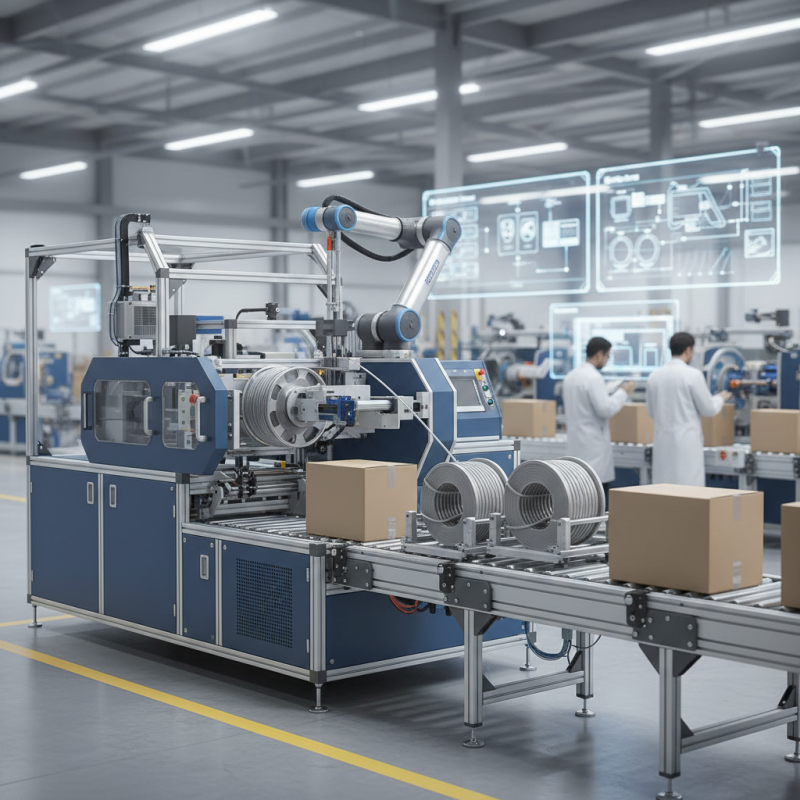
Understanding the Different Types of Coiling and Packing Machines
When selecting a coiling and packing machine, it's essential to understand the various types available. Each type serves different functions and industries. For instance, there are horizontal coilers ideal for compact products. These machines can efficiently handle multiple materials. They work well for industries like textiles and electronics. Vertical coiling machines, on the other hand, save floor space. They are perfect for heavy-duty materials and larger items.
Another critical type is automatic packing machines. These enhance productivity by reducing manual labor. They can wrap and seal products swiftly, maintaining consistency. Semi-automatic machines offer flexibility but require operator input. It's crucial to assess your production volume when making this choice.
Reflecting on the current market, some machines may not suit every requirement. A machine that works well for one company might not fit another's needs. Ensure you consider your product specifications carefully. Mistakes can easily occur if priorities are misplaced. Coiling and packing can significantly impact your final product's quality, so making an informed decision is vital.
How to Choose the Best Coiling and Packing Machine for Your Needs?
| Machine Type | Ideal For | Speed (Units/Hour) | Dimensions (LxWxH in cm) | Price Range (USD) |
| Automatic Coiling Machine | High-volume production | 600-1200 | 150 x 75 x 100 | $25,000 - $40,000 |
| Semi-Automatic Coiling Machine | Medium to high volume | 300-600 | 120 x 70 x 90 | $15,000 - $25,000 |
| Manual Coiling Machine | Small businesses or crafts | 50-150 | 80 x 50 x 60 | $2,000 - $5,000 |
| Vertical Packing Machine | Granular products | 500-1000 | 100 x 60 x 150 | $10,000 - $20,000 |
| Horizontal Packing Machine | Solid products | 400-800 | 120 x 70 x 90 | $12,000 - $18,000 |
Identifying Your Specific Packaging Needs and Requirements
When selecting a coiling and packing machine, it’s crucial to identify your specific packaging needs. Understanding your product dimensions, weights, and materials will guide your choice. For instance, a study from Packaging World indicates that 70% of businesses faced inefficiencies due to mismatched equipment.
Tips: Always calculate your production volume. This helps avoid investing in machines that can't keep up or are overkill for your needs.
Consider the type of products you package. Are they fragile? Bulkier items may require more robust packing solutions. Additionally, machine versatility can save costs. A report by Smithers Pira highlights that flexibility in packing machines can lead to a 30% reduction in operation times.
Tips: Don't overlook automation features. These can enhance precision and reduce labor costs, but they may be complex at first. Take time to assess whether automation meets your needs fully.
Lastly, think about future growth. Your current machine should accommodate potential business expansion. Investing in equipment that cannot adapt to increased demand might lead to setbacks. Balancing immediate requirements with long-term goals is essential.
Evaluating Key Features and Specifications of Machines
When evaluating coiling and packing machines, focus on key specifications. The machine's speed is crucial. Many machines operate at speeds of 30 to 150 packs per minute. If your production demands high volume, opt for faster machines. However, faster doesn't always mean better. Reliability is equally important. A machine that breaks down can lead to costly downtime.
Tips: Assess your production volume. A slower, reliable machine may be better than a fast, unreliable one.
Consider the machine's adaptability. Some models handle various package sizes and materials. This flexibility can save costs in the long run. Take a look at user-friendly interfaces. Machines with intuitive controls reduce training time. A complex system can lead to mistakes and slow production.
Tips: Check for maintenance requirements. Frequent servicing can hinder operations.
Investing in automation features can enhance efficiency. Automated feeding and packing can cut labor costs. However, automation may come with a steeper learning curve. Ensure your team is ready to adapt. Keep these considerations in mind. Your choice can significantly affect productivity and profitability.
Comparing Brands and Models for Reliability and Performance
When selecting a coiling and packing machine, reliability is crucial. A reliable machine minimizes downtime. Look for models that have a proven track record. This often means studying user reviews and performance data. Sometimes, you may find that popular models face common issues. Understanding these concerns can guide your decision.
Performance is equally important. Focus on speed and efficiency. A faster machine can improve productivity. However, faster doesn't always mean better. Some machines sacrifice quality for speed. You need to strike a balance. Consider how each model handles different materials. Will it adapt to your specific packaging needs? Testing machines in action can highlight strengths and weaknesses.
Don’t overlook customer service, too. Some brands provide better support than others. This can be a deciding factor. A helpful support team can save you time and stress. Research your options carefully. Making the right choice now will benefit your workflow in the long run. Take your time; it's worth it.
Budget Considerations and Cost-Effectiveness in Selection
When considering a coiling and packing machine, budget is paramount. Many companies allocate 15-30% of their total production budget to equipment purchases. An effective machine can dramatically enhance efficiency and reduce labor costs. For instance, automated machines can perform tasks in under half the time compared to manual processes. This can lead to significant cost savings over time.
However, it's crucial to balance cost with functionality. A cheaper machine might lack features that optimize performance. Research indicates that investing in quality equipment can yield a return on investment (ROI) of approximately 25-40% within the first year. Many users find that low initial costs can result in higher maintenance expenses later. It's essential to analyze long-term costs thoroughly before deciding.
Also, consider the total cost of ownership (TCO) rather than just the sticker price. This includes maintenance, training, and downtime costs. Estimates show that TCO can be 20-50% higher than the purchase price for certain machines. Some companies regard equipment as an asset that depreciates over time, affecting budget forecasts. Clear financial planning is vital for aligning machinery choices with business goals.