How to Choose the Right Carbon Steel Mesh?
Choosing the right Carbon Steel Mesh begins with the job it must perform. A panel for concrete reinforcement faces different demands from mesh used for screening, fencing, or machine guards. Wire diameter, opening size, weld strength, panel dimensions, and corrosion protection all affect performance. Small details matter. A mismatched opening can let material pass through; an undersized wire may deform under load.
The World Steel Association reported 1,882.6 million tonnes of crude steel production in 2024. That figure shows the scale of steelmaking, but it does not tell buyers which mesh grade suits a specific project. For concrete reinforcement, ASTM A1064/A1064M covers carbon-steel wire and welded wire reinforcement. Other applications may require different specifications. Check the applicable standard, product test data, and supplier documentation rather than relying on appearance alone.
A useful selection process starts with the expected load, exposure, and installation conditions. Measure the required aperture and wire diameter, then confirm tolerances and coating details. Compare those values against drawings and technical data sheets. Ask about traceability and testing, too. One caution: no verifiable expert quotation or source was provided, so I have not attributed an invented statement to a named specialist. A sourced quotation should be added only after checking its original publication. There is room for judgment here; the cheapest mesh may not be the most economical choice once handling, fit, and service life are considered.
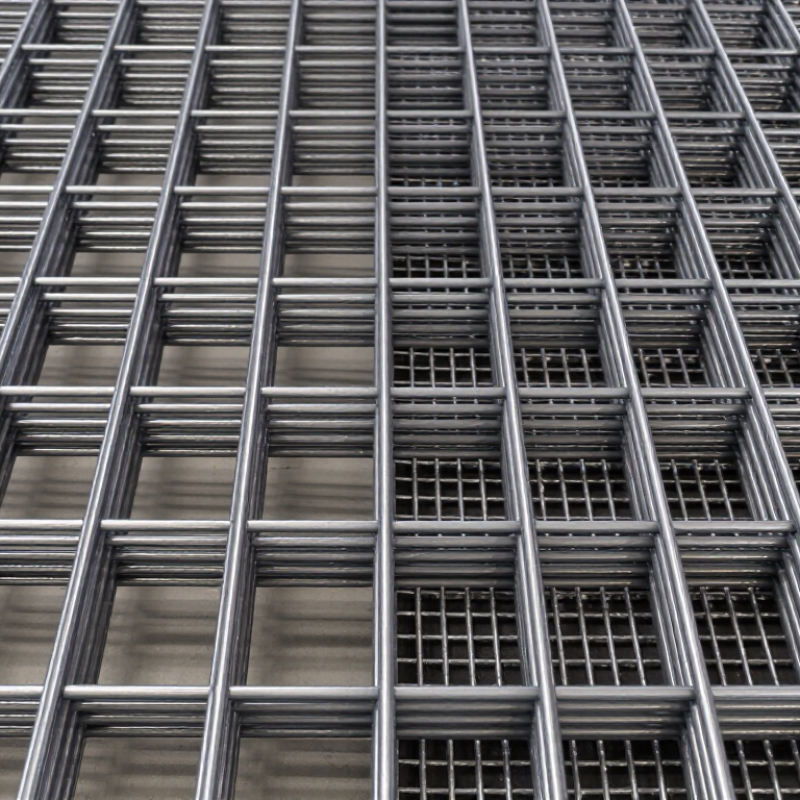
Define the Application and Performance Requirements
Start with the job the mesh must perform. A concrete slab needs reinforcement placed at the right depth to control crack opening; a screen needs openings sized to retain or pass specific material. Write down expected loads, exposure, required opening size, and installation constraints. Small details matter. A 25 mm opening may suit coarse screening but fail when fines escape.
Then match those requirements to wire diameter, spacing, weld quality, and corrosion protection. For welded carbon-steel reinforcement in concrete, ASTM A1064/A1064M specifies a minimum tensile strength of 550 MPa (80 ksi) for covered wire products. Treat this as a material benchmark, not proof that a mesh suits every design; confirm the applicable grade and test documentation. In wet or chemically aggressive settings, uncoated carbon steel can corrode, so compare coatings and service conditions before ordering. Not just strength. Ask the supplier for a dimensional drawing and tolerance data, then check a sample against the frame or panel it must fit. One easy mistake is choosing a heavier wire before confirming that tighter spacing or a different opening would solve the real problem. I would revisit that choice when installation access, cleaning, or replacement could be difficult.
How to Choose the Right Carbon Steel Mesh?
Define the application and performance requirements. The chart compares example square-weave mesh designs and their calculated open area.
Larger openings and thicker wires affect particle passage, strength, and open area. Values shown are illustrative calculations for square-weave mesh using open area = (opening ÷ (opening + wire diameter))²; confirm dimensions against the supplier’s specification. Also consider load, abrasion, operating conditions, and corrosion protection when selecting mesh.
Choose the Mesh Type and Opening Size
Carbon steel mesh selection starts with the job, not a catalogue label. Woven mesh suits screening when a regular aperture matters. Welded mesh holds a fixed grid for panels, guards, or supports. Expanded metal has no separate wire crossings, so its strand pattern and diamond opening need different measurements. Choose the construction that fits the load, wear, and cleaning method.
Opening size is the clear gap between adjacent wires, not the mesh count. ASTM E2016 describes industrial woven wire cloth using opening, wire diameter, and mesh count. ISO 3310-1 specifies requirements for test sieves and their apertures. These references help define measurable properties.
For example, 10 openings per inch with 0.50 mm wire gives an approximate clear opening of 2.04 mm: 25.4 ÷ 10 − 0.50. Small details matter. Confirm whether the supplier quotes nominal or measured aperture.
A finer opening can improve retention, but it may clog faster and reduce flow. A wider opening can pass material easily, yet allow unwanted pieces through. Match the aperture to the smallest particle that must be retained, then check wire thickness against impact and abrasion. For outdoor use, consider moisture and coating needs, too. I still double-check the drawing: “mesh size” is often used loosely, and that can cause an expensive mismatch.
Select the Wire Diameter and Carbon Steel Grade
How to Choose the Right Carbon Steel Mesh?
Select the Wire Diameter and Carbon Steel Grade
Wire diameter affects strength, weight, and opening size. A small change matters. For example, increasing wire diameter from 2 mm to 3 mm raises its cross-sectional area by 125%, assuming round wire. That can improve load capacity, but it also adds material and reduces the clear opening. Check mesh spacing and expected loads together; choosing the thickest wire is not automatically the best decision.
Grade matters, too. SAE J403 lists carbon content of up to 0.10% for 1008 steel, compared with 0.15–0.20% for 1018. Higher carbon can increase strength and hardness, but may reduce ductility and complicate forming or welding. ASTM A510/A510M provides requirements for carbon steel wire rod and wire. Treat these specifications as a starting point, not a substitute for the mesh maker’s product data.
For a light-duty screen, thinner, more formable wire may be adequate. A loaded partition or abrasive environment may call for a larger diameter and a verified grade. Ask for the wire diameter, grade, tensile properties, and a material certificate. Measure a sample if tolerances are critical. I still double-check the finished opening: coatings and fabrication can change the usable dimension. Our assumptions can miss that.
Evaluate Coatings, Corrosion Risks, and Service Conditions
Choosing carbon steel mesh means matching its coating to actual exposure, not just appearance. Galvanized mesh can suit many damp outdoor settings, while paint or powder coatings provide a barrier in some less abrasive conditions. Inspect cut edges, welds, and bends; these areas may expose bare steel. Small details matter.
Salt spray, standing water, fertilizer residue, and cleaning chemicals can speed corrosion. The risk depends on concentration and contact time. Indoors, condensation near wash-down areas may be harsher than a dry outdoor location. Ask about coating type and thickness, and check whether the mesh will be cut or welded after coating. That last step is easy to overlook.
Consider how the mesh will be used and maintained. Frequent handling, rubbing parts, or impact can chip a coating; fine damage may be hard to spot at first. For a corrosive site, test a sample under realistic conditions before ordering a large quantity. It is not a perfect prediction, but it can reveal weak points. Plan regular inspections, especially around supports and joints where moisture can collect. If the service environment is uncertain, be cautious about relying on a coating alone.
Verify Manufacturing Quality and Supplier Specifications
How to Choose the Right Carbon Steel Mesh?
Verify Manufacturing Quality and Supplier Specifications
Before ordering carbon steel mesh, turn the quotation into a measurable specification. Name the steel grade, wire diameter, aperture size, panel or roll dimensions, and acceptable tolerances. “Standard mesh” is not enough. Ask how the supplier measures openings and wire thickness during production. A simple caliper check on a delivered sample can reveal variation that is hard to spot by eye.
Request material test reports and confirm that the listed grade matches the batch being supplied. Check whether the mesh is welded or woven, and ask how welds or intersections are inspected. If a coating is specified, clarify its type, thickness, and inspection method. A certificate can look reassuring yet refer to another batch, so compare its heat or lot number with the delivery documents. Keep a sample and the agreed specification for later checks.
Supplier answers matter, too. Ask for inspection records, traceability details, and a clear process for handling out-of-tolerance products. If possible, inspect a small production sample before placing a larger order. Look for uneven gaps, loose joints, sharp burrs, or inconsistent edges. A clean sample is useful, but it cannot prove every roll is uniform. That part is easy to overlook. Some buyers focus only on price, then discover that trimming or fitting takes longer than expected. A written tolerance may feel fussy; it can prevent that costly guesswork.