
Best Roller Table Conveyor Manufacturers in China
A Roller Table Conveyor can look simple: steel rollers, a welded frame, and a motor or gravity feed. Yet small design choices affect how smoothly cartons move, how easily operators clear jams, and how much maintenance a line needs. For buyers comparing manufacturers in China, the details matter. Roller diameter, load rating, frame finish, drive layout, and spare-parts access deserve close attention.
Quality-management expert W. Edwards Deming warned, “A bad system will beat a good person every time.” That principle applies to conveyor selection: a capable team cannot compensate for equipment poorly matched to its loads or workflow. A useful supplier should explain the design assumptions, provide clear drawings, and answer practical questions about testing and service. Ask how the conveyor handles uneven cartons, frequent starts, or dust near the rollers. Small details matter.
This guide examines manufacturers through factors buyers can verify, including product range, engineering support, customization, production quality, and communication. A polished catalog is helpful, but it cannot show how a supplier responds when a roller arrives damaged or a layout changes. No shortlist can replace checking samples, specifications, and references. That takes effort. Some comparisons will remain imperfect, especially when companies disclose different levels of technical information. The aim is not to crown a universal winner, but to help readers identify a Roller Table Conveyor partner suited to their actual site, throughput, and maintenance capacity.
What Roller Table Conveyors Are and How They Work
Best Roller Table Conveyor Manufacturers in China
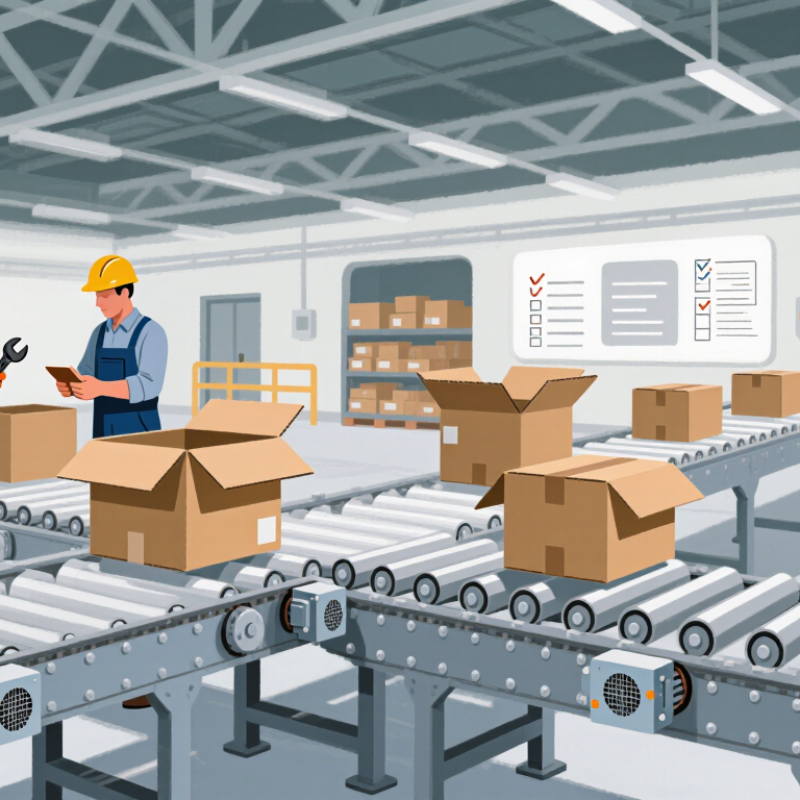
A roller table conveyor moves cartons, totes, or rigid packages across a row of rotating cylinders. In a gravity system, a slight incline lets the load travel downhill; powered models use motors and drive components to turn the rollers. The frame supports the roller shafts, while bearings reduce friction during rotation. Simple, but not effortless. Roller spacing must suit the smallest package: a short carton can tip or snag if it rests on too few rollers. In practical installations, operators also check load weight, package base, transfer points, and access for cleaning.
The market is growing, though broad market figures should not be mistaken for roller-table-specific demand. Grand View Research estimated the global conveyor systems market at about US$10.3 billion in 2023 and projected a 4.5% compound annual growth rate from 2024 to 2030. That context reflects demand across many conveyor types. For a roller table, the useful design question is more specific: can it handle the actual package mix at the required speed? A clean test with the lightest and heaviest loads can reveal problems early. I would not rely on a catalogue rating alone; real cartons are rarely perfectly square or consistently packed.
Best Roller Table Conveyor Manufacturers in China - What Roller Table Conveyors Are and How They Work
| Conveyor Type | How It Works | Common Applications | Key Design Data | Points to Check When Comparing Suppliers |
|---|---|---|---|---|
| Gravity roller conveyor | Loads move over freely rotating rollers by gravity or manual pushing. Gravity-fed sections are commonly installed with a slight decline. | Cartons, totes, and other stable-bottom packages in packing, sorting, and staging areas. | Check load weight, package-bottom condition, roller diameter, roller spacing, and conveyor incline. A common layout rule is to keep at least three rollers beneath the shortest load during travel. | Ask for the rated load per section, frame material and finish, adjustable support options, and confirmation that the package base can bridge the roller gaps. |
| Chain-driven live roller conveyor | A motor drives a chain that turns the rollers, providing powered movement. Zones can be arranged to start, stop, or accumulate loads depending on the design. | Pallets, heavy containers, and production-line transfers where powered movement is required. | Specify unit load, conveyor width and length, line speed, duty cycle, and required accumulation behavior. The drive and chain arrangement must be sized for the load and operating conditions. | Review guarding, emergency-stop provisions, chain tensioning and maintenance access, motor controls, and the stated capacity under the intended operating duty. |
| Belt-driven live roller conveyor | A belt beneath the rollers transfers motion to them. This drive arrangement can provide relatively quiet operation and is often used for package handling. | Cartons and totes in distribution, order-picking, and light-to-medium-duty conveying systems. | Compare package size and weight, speed, roller spacing, belt type, and the required start-stop or accumulation function. | Check belt replacement access, drive layout, noise expectations, control compatibility, and whether the quoted capacity applies to continuous or intermittent operation. |
| Motor-driven roller conveyor | Rollers contain individual motors or are powered in controlled zones. Sensors and controls can regulate movement and help manage accumulation. | Automated sorting, packing, and warehouse systems that need controlled starts, stops, or zone-based flow. | Define load range, zone length, speed, control voltage, communication requirements, and the number of starts and stops expected in normal operation. | Confirm sensor and controller compatibility, fault diagnostics, electrical documentation, spare-parts availability, and the system’s behavior when a zone is blocked. |
| Curved roller conveyor | Roller positions and, where needed, tapered rollers guide loads around a turn while maintaining support across the curve. | Changes in conveyor direction in warehouses, packaging lines, and production areas. | Specify the turning angle, inside and outside radii, conveyor width, load dimensions, and whether the curve is gravity-driven or powered. | Check that loads remain stable through the turn, that the stated dimensions match the site layout, and that transitions into and out of the curve are included. |
| General specification note: Roller diameter, spacing, frame construction, speed, and load capacity vary by application and design. Request a dimensioned drawing and a written capacity rating based on the actual product, load distribution, operating duty, and installation conditions. | ||||