
A Control Circuit Board is more than a green panel beneath rows of components. It routes signals, manages power, and helps equipment respond reliably to real operating conditions. For manufacturers, small choices matter: copper thickness, connector placement, heat paths, and inspection criteria can affect performance after thousands of operating hours. The stakes are growing. Grand View Research valued the global printed circuit board market at USD 76.12 billion in 2023 and forecast a 5.1% compound annual growth rate from 2024 to 2030. That figure covers the broader PCB market, not control boards alone, so it should be read as context rather than a precise segment estimate.
IPC, the global electronics manufacturing association, provides industry standards and market research that help buyers evaluate manufacturing quality and supply-chain capability. IPC President and CEO John W. Mitchell has emphasized the electronics industry’s role in innovation and economic growth. For a sourcing team, the practical lesson is clear: supplier claims deserve careful checking. Ask how a manufacturer handles design reviews, traceability, process control, and testing—not just its production capacity. A board may look flawless on a sample bench and still struggle with vibration, heat, or inconsistent assembly. Details count.
This guide introduces ten China-based manufacturers and the capabilities buyers may wish to compare. It is not a substitute for audits, technical reviews, or sample testing. Rankings can also miss important context, including a factory’s fit for a particular application. That limitation matters. Choose against documented requirements, not a polished brochure alone.
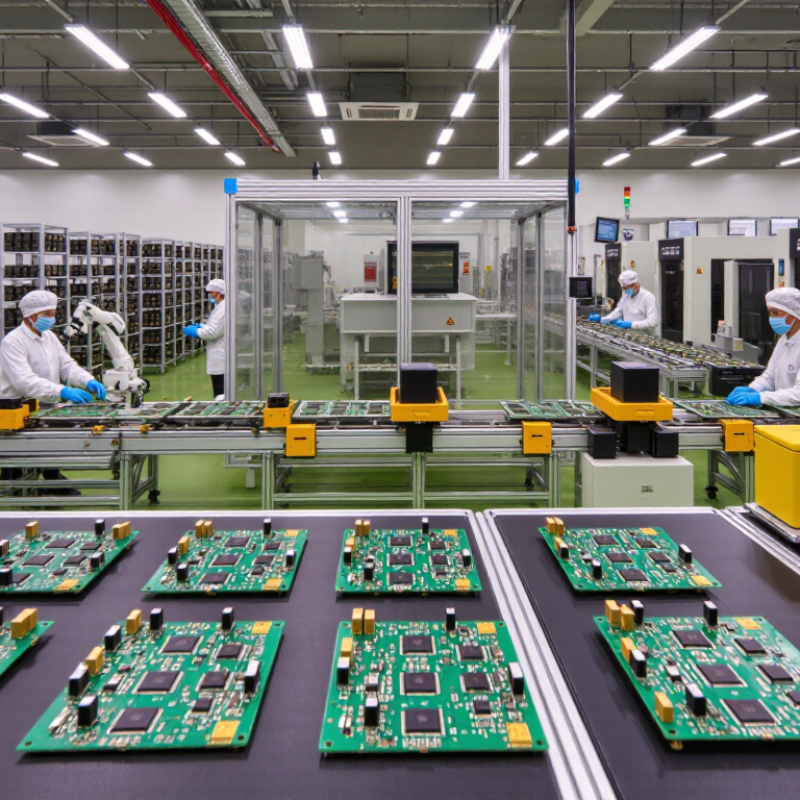
A control circuit board is the electronic platform that monitors inputs and directs a machine’s actions. It typically combines a printed circuit board with components such as microcontrollers, relays, connectors, and protective parts. Sensors may report temperature, position, or pressure; the board processes those signals and switches outputs. A fan might start when a sensor detects heat, while a pump may stop when a tank reaches a set level. The exact arrangement depends on the equipment and its operating conditions.
Control boards appear in appliances, industrial machines, lighting systems, and building equipment. Their job is not always to make a device faster or more powerful. Often, they make its behavior repeatable and easier to manage. On a production line, for example, a board can coordinate a motor, a limit switch, and an indicator light. Small details matter. A loose connector or poorly protected input can cause intermittent faults that are difficult to reproduce. Engineers therefore consider electrical noise, heat, vibration, and access for maintenance during design and testing. A tidy schematic helps, but it cannot reveal every problem in a real enclosure. Observing the board under realistic operating conditions remains important.
China’s control circuit board industry is not a single product line. It spans bare-board fabrication, component sourcing, assembly, testing, and engineering support. Control boards may use rigid multilayer, flexible, or mixed-technology designs, depending on vibration, heat, space, and signal requirements. Prismark’s 2023 market review estimated global PCB production value at about US$73.8 billion, down roughly 15% from 2022. That figure covers the wider PCB market, not control boards alone—a distinction often missed in supplier comparisons.
Production is concentrated in electronics manufacturing regions, especially Guangdong, Jiangsu, and Zhejiang. Local access to laminate, copper foil, components, tooling, and contract assembly can shorten procurement loops. It also makes capacity flexible. A factory may build industrial motor-control boards one week and appliance control boards the next, though qualification needs differ. IPC’s industry research tracks electronics manufacturing conditions and supply-chain pressures; its findings help explain why buyers increasingly assess traceability, process control, and test coverage alongside price.
The supply chain has layers. Board shops make and finish the substrate; assemblers place components and solder them; engineering teams validate the design and test the finished unit. Not every supplier controls all stages. This matters. A low-cost quote may omit firmware loading, environmental testing, or long-term component planning. Buyers should verify which steps happen in-house, what test records are retained, and whether capacity claims match the board’s actual layer count and production volume. The structure is efficient, but it can be opaque.
Industry-structure reference, not a verified ranking of individual companies. The ten rows represent common manufacturer capability segments in China’s PCB supply chain; capabilities vary by factory, product, and qualification requirements. No company or brand names are included.
| Segment | Typical Control-Board Products | Common Board Technologies | Typical End Markets | Key Manufacturing and Quality Focus | Role in the Industry Structure |
|---|---|---|---|---|---|
| Industrial automation boards | PLC, remote I/O, motion-control, and machine-interface boards | Rigid multilayer boards, plated through-holes, mixed analog and digital circuits | Factory automation, machine tools, packaging equipment | Stable drilling and plating, controlled impedance where required, solderability, and inspection of fine-pitch assembly features | Serves equipment makers needing long product lifecycles and consistent production quality |
| Power-control boards | Motor drives, power conversion, switching, and protection circuits | Heavy-copper or standard-copper rigid boards; thermal design depends on current and heat load | Industrial drives, power supplies, energy equipment | Copper thickness control, conductor spacing, thermal management, and verification against electrical and safety requirements | Connects PCB fabrication with power-electronics design and assembly requirements |
| Automotive control-board suppliers | Electronic control modules and vehicle subsystem boards | Rigid multilayer boards, with material and layout choices determined by the application | Vehicle electronics and automotive component supply chains | Traceability, change control, process documentation, and customer-specific qualification; requirements depend on the program | Operates within qualification-driven supply chains with stringent documentation expectations |
| Appliance-control board manufacturers | Control boards for heating, cooling, washing, and household equipment | Single-sided and multilayer rigid boards; through-hole and surface-mount designs | Home appliances and commercial equipment | Cost-effective panelization, repeatable solder-mask registration, and reliable production testing | Supports high-volume production where cost, supply continuity, and dependable assembly are important |
| LED and lighting-control board suppliers | LED driver and lighting-control boards | FR-4 boards and, where thermal needs call for it, metal-core boards | Commercial, industrial, and architectural lighting | Thermal path design, dielectric integrity for metal-core constructions, and inspection of solderable surfaces | Combines PCB fabrication choices with heat-management needs of lighting products |
| Instrumentation and sensor-board manufacturers | Measurement, signal-conditioning, and sensor-interface boards | Rigid boards with analog, digital, or mixed-signal layouts; layer count depends on design complexity | Test equipment, process measurement, and monitoring systems | Cleanliness, controlled feature geometry, low-noise layout support, and inspection appropriate to the design | Supplies precision-oriented products where electrical performance and stable fabrication matter |
| Telecommunications and networking control-board suppliers | Control, interface, and communication boards for network equipment | Multilayer rigid boards; controlled-impedance construction is used when required by signal design | Telecommunications and data-communications equipment | Layer registration, impedance control when specified, and electrical testing of completed boards | Provides more complex interconnects for equipment with demanding signal-integrity requirements |
| High-mix, low-volume PCB manufacturers | Prototype and small-batch control boards across varied designs | Common rigid-board constructions, with build options selected for each design | Product development, specialized machinery, and replacement parts | Engineering review, fast design-for-manufacture feedback, and controlled handling of frequent revisions | Bridges product development and volume production by supporting varied orders and design changes |
| Flexible and rigid-flex control-board suppliers | Boards for compact or moving assemblies and constrained enclosures | Flexible circuits and rigid-flex constructions, selected according to bend and assembly requirements | Compact industrial devices, instrumentation, and specialized equipment | Material handling, coverlay registration, bend-area design, and validation of the intended flexing conditions | Serves applications where wiring space, weight, or movement makes rigid boards impractical |
| PCB assembly-integrated manufacturers | Fabricated and assembled control-board products | Rigid boards and other constructions matched to the product design; assembly may include surface-mount and through-hole parts | Industrial controls, appliances, instrumentation, and equipment makers | Coordination of fabrication and assembly, component traceability where required, inspection, and functional testing defined by the customer | Offers a combined supply route from bare board production to assembled control-board delivery |
A credible ranking should compare manufacturers using evidence, not marketing language. Evaluation can begin with engineering capability, including schematic review, component selection, board layout, and design-for-manufacturing checks. Reviewers should examine sample test reports, inspection procedures, and records showing how defects are handled. Ask whether the same standards apply across prototypes and repeat production. Numbers need context. A low defect rate means little without order volume, product complexity, and a clear measurement period.
Manufacturing quality also depends on traceability and process control. Useful evidence includes documented material checks, soldering inspection, functional testing, and controlled revision records. Technical range matters, but it should match the intended application rather than simply list many capabilities.
Delivery performance, communication, and engineering response times deserve measurable criteria too. A factory tour or process audit can reveal practical details, such as labeled workstations and calibration records, that brochures may omit. No score is perfect. Rankings should disclose their weighting and evidence limits, since one missed factor can change the result.
These ten profiles highlight different capabilities found among control circuit board manufacturers in China; they are comparison points, not a verified ranking. The first profile focuses on high-volume production, with automated placement lines and inspection cameras suited to repeat orders. The second emphasizes small-batch work, where engineers can adjust layouts or component choices before a larger run. The third serves industrial controls, typically prioritizing stable operation, clear labeling, and boards that fit compact metal enclosures. The fourth specializes in power-control designs, where copper thickness and heat management deserve close review.
Details matter.
The fifth profile centers on flexible production for varied board sizes and layer counts. The sixth focuses on assembly support, including sourcing components and checking substitutions against approved specifications. The seventh highlights testing, such as continuity checks and functional tests using a customer’s control sequence.
Ask for evidence.
Test coverage can differ widely, even when supplier descriptions sound similar. The eighth profile suits projects needing careful documentation, including revision tracking and inspection records. The ninth is geared toward harsh operating environments, where coating, vibration, and temperature limits should be discussed early. The tenth offers broad design-to-assembly support, which may simplify communication but does not guarantee better results. Some details need a second look: published capabilities are not the same as proven performance. Buyers can compare sample boards, test reports, response times, and production controls before selecting a supplier.
Choosing a control board supplier takes more than comparing unit prices. Prismark’s 2024 industry analysis estimated global PCB production value at about US$69 billion in 2023, around 15% below 2022. That volatile market makes capacity, material sourcing, and delivery planning worth checking carefully. Ask suppliers to explain their actual process limits: minimum trace width, layer count, copper weight, impedance control, and supported board materials. Request recent samples built to a similar specification, not just a polished capability sheet.
Small details matter.
During an audit, review how the factory controls incoming materials, soldering, inspection, and engineering changes. Ask for traceability from laminate lot to finished board, plus records from AOI, electrical testing, and functional testing. IPC-A-600 and IPC-6012 provide useful acceptance and qualification references; confirm which revision and class the supplier can meet. Check whether test fixtures and functional test plans are included in the quotation. Compare prototype and production lead times separately, and ask what happens when components or specifications change. A neat audit file is reassuring, but it cannot prove every shift follows the same process.
No checklist catches everything.
Speak with the engineering and quality teams, and verify key claims against real production records.
