
An extruder line depends on parts that convey, melt, seal, and shape material consistently. For buyers, choosing components is not simply a matter of comparing prices. A screw designed for one polymer, output rate, or machine geometry may perform poorly in another setup. Small differences matter.
This guide introduces 10 Extruder Machine Parts buyers should understand, from screws and barrels to gearboxes, heaters, thermocouples, dies, and screen changers. Each component affects a different part of the process. A worn barrel can contribute to uneven output, while a faulty thermocouple may cause inaccurate temperature readings. These symptoms can have other causes, too, so inspection and machine records should guide decisions rather than guesswork.
Good purchasing starts with the machine’s specifications, material requirements, operating conditions, and maintenance history. Confirm dimensions, materials, tolerances, and compatibility with the equipment manufacturer or a qualified supplier. Ask about expected service life and replacement procedures, but treat estimates as estimates. Actual wear varies with resin, throughput, cleaning practices, and operating conditions.
Details add up. A carefully matched part can support stable production and reduce avoidable downtime, but no component guarantees a perfect process. Even experienced teams can overlook a small fit or temperature issue. Use this overview as a practical starting point for asking better questions, comparing options, and planning maintenance with greater confidence.
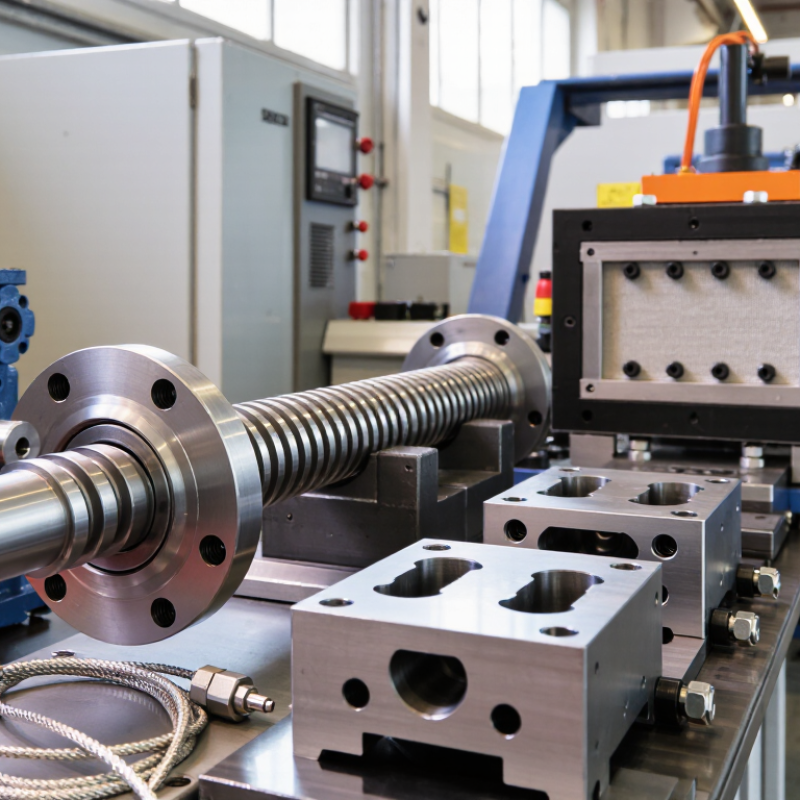
An extruder turns prepared material into a continuous shape. Pellets or powder enter a heated barrel, where a rotating screw conveys, compresses, melts, and mixes them. The screw’s flights push material forward; its changing channel depth helps build pressure. At the end, molten material passes through a die that sets its initial profile, such as a tube, sheet, or strand. It is a controlled push, not a simple melt-and-pour process.
Details matter. In practice, operators monitor temperature zones, screw speed, pressure, and cooling conditions. A small change can cause uneven thickness, bubbles, or a rough surface. After leaving the die, the product may be calibrated, cooled, pulled, and cut. PlasticsEurope’s Plastics—The Fast Facts 2023 reports global plastics production of 400.3 million tonnes in 2022. That figure describes a broad industry, not extrusion alone, but it shows the scale of material processing behind everyday products. The process is not perfectly forgiving. Even a stable-looking line can hide inconsistent melt quality, so measurements and inspection remain essential.
An extruder works as a connected system, not a collection of independent parts. Material enters through the hopper, then the rotating screw carries it through the heated barrel. Screw flights move and compress the material, while controlled heat helps it soften evenly. The gearbox supplies the torque needed to turn the screw. Feed rate, screw speed, and temperature must stay in balance. Small changes matter.
As material moves forward, pressure builds near the end of the barrel. A screen pack can catch contaminants and help create more even flow, though it also adds resistance. The die shapes the softened material as it exits. If temperatures vary or the screen becomes restricted, output may fluctuate or show rough surfaces. In practice, the sequence is less tidy than a diagram suggests; material properties and wear can change how components behave. Buyers should check whether controls, screw design, and die requirements suit the intended material and production rate.
Tips: Ask how temperature zones are monitored, and inspect the screw and barrel for wear. Compare output stability under realistic operating conditions, not just rated capacity. Keep notes during trials; small process details are easy to overlook.
An extruder’s performance depends on parts working together, not on one impressive specification. Buyers should inspect the screw and barrel as a pair: screw geometry, alloy, and wear resistance must suit the material and production rate. Check the hopper for steady feeding and the feed throat for adequate cooling. Small details matter. A restricted throat can cause inconsistent output.
The screen changer and breaker plate affect melt cleanliness and pressure. Ask for operating pressure limits and practical maintenance access. The die shapes the melt, so confirm its dimensions, flow requirements, and temperature range before ordering. Heaters and thermocouples need to match the barrel zones and control system. Fit matters. A connector that looks close may still cause downtime.
The gearbox transfers power to the screw, making torque rating, lubrication, and shaft compatibility important checks. Request drawings, material specifications, and tolerances, then compare them with the machine’s actual measurements. I would not assume a heavier screw is automatically better; resin, output, and wear all change the right choice. Even careful checks can miss something, so document dimensions and operating conditions before purchase.
Matching extruder parts starts with the product, not the machine’s maximum rating. Record resin type, additives, target output, melt temperature, and required dimensions before choosing components. A screw designed for gentle melting may struggle with a heavily filled compound. A high-output die may also create uneven thickness if cooling cannot keep pace. PlasticsEurope reported 413.8 million tonnes of global plastics production in 2023, underscoring the range of materials and processing demands manufacturers must accommodate.
For abrasive or glass-filled materials, compare screw and barrel wear resistance, then check whether the expected service interval fits your maintenance schedule. For tight dimensional tolerances, assess die flow balance, screen-pack pressure, and temperature-sensor placement. Gearbox torque and motor capacity should suit the actual operating load, not just a brief peak. A recurring mistake in parts reviews is prioritizing throughput while overlooking melt quality. There is no perfect parts list; real production data may challenge the original specification.
Tips: Share a recent process log with your supplier. Include output rate, melt temperature, pressure, and any visible defects. Ask how each proposed part affects those readings. Small details matter.
| Extruder Part | Main Function | What to Match to Production Requirements | Useful Selection Checks |
|---|---|---|---|
| 1. Screw | Conveys, melts, mixes, and pressurizes the material as it moves through the barrel. | Match the screw design to the polymer or compound, required output, product quality, and whether the process needs melting, mixing, venting, or gentle handling. | Review screw diameter, length-to-diameter ratio, channel and mixing-section design, and wear or corrosion resistance. Screw geometry should be selected for the specific material and process rather than by size alone. |
| 2. Barrel | Contains the screw and provides the heated, pressure-bearing processing channel. | Match its bore, working length, pressure and temperature limits, and wear resistance to the screw, material, and required production rate. | Nitrided alloy-steel barrels are used in many general-purpose applications; bimetallic liners may be considered for more abrasive or corrosive materials. Check bore condition and compatibility with the screw. |
| 3. Feed Throat | Connects the feed opening to the barrel and guides material into the screw channel. | Match the opening and cooling arrangement to the material’s feeding behavior, bulk flow, and risk of softening or bridging near the feed zone. | Check for adequate feed area, reliable cooling where required, and alignment with the hopper and screw. Poor temperature control in this area can disrupt feeding. |
| 4. Hopper and Feeding System | Stores and delivers pellets, powder, flakes, or regrind to the extruder feed throat. | Choose the feed arrangement for material form, bulk density, flowability, blend consistency, and target feed rate. | Confirm hopper capacity and outlet geometry. Bridging-prone materials may need agitation or a suitable feeder; gravimetric feeding can help maintain a controlled recipe and feed rate. |
| 5. Screen Changer | Holds and, depending on its design, changes filter screens to remove contaminants from the melt. | Match the flow capacity, operating pressure and temperature limits, screen area, and changeover method to the material cleanliness and production continuity requirements. | Check the permitted pressure and temperature ratings, sealing arrangement, and compatibility with the melt. Screen changes can affect pressure drop, so selection should account for the intended filtration level. |
| 6. Breaker Plate and Screen Pack | The screen pack filters the melt; the breaker plate supports the screens and helps distribute flow into the next section. | Match screen mesh sequence and open area to contaminant size, desired filtration, melt viscosity, output, and allowable pressure drop. | Use a breaker plate designed for the machine and operating pressure. Excessive restriction can raise upstream pressure, while insufficient filtration may allow contaminants into the product. |
| 7. Die or Extrusion Head | Shapes the pressurized melt into the required profile, sheet, film, pipe, or other continuous product. | Match the flow channel and die opening to product geometry, material behavior, output rate, dimensional tolerances, and downstream calibration or cooling equipment. | Check flow distribution, temperature control, pressure capacity, and cleanability. Die design and setup influence output uniformity and can require material- and product-specific tuning. |
| 8. Heaters and Temperature Sensors | Heaters add heat to barrel and die zones; sensors measure temperature for process control. | Match heater power, zone layout, sensor type, and control system to the machine’s zone configuration and the material’s processing temperature range. | Confirm voltage, dimensions, mounting fit, and temperature ratings. The sensor must be positioned and configured appropriately for the control system; a heater alone does not ensure accurate melt temperature. |
| 9. Barrel Cooling System | Removes heat from selected barrel zones to control temperature and stabilize processing. | Match cooling capacity and control method to the process heat load, screw speed, material sensitivity, and required temperature stability. | Air cooling with fans and liquid cooling are both used, depending on machine design. Check fan or coolant capacity, zone controls, connections, and whether cooling can respond to changing operating conditions. |
| 10. Gearbox and Thrust Bearing | The gearbox reduces motor speed and transmits torque; the thrust bearing carries axial force generated during extrusion. | Match continuous torque, speed range, axial load capacity, duty cycle, and mounting arrangement to the screw and planned operating conditions. | Check rated operating limits, lubrication requirements, bearing condition, and alignment. Torque and thrust requirements depend on the material, screw design, pressure, and production rate. |
Selection note: Confirm dimensions, ratings, material compatibility, and machine interface details before ordering replacement parts. Final specifications depend on the extruder design, processed material, and operating conditions.
An extruder’s screw, barrel, screen pack, heater bands, and seals each affect output in different ways. Assess parts against the machine’s model, material, operating temperature, and production rate. A screw that looks similar may have a different flight depth or compression ratio. That difference can change melt quality and motor load. Check dimensions, material specifications, and stated tolerances before purchase. Smooth surfaces matter, but appearance alone proves little. Ask for inspection records or measurement data when fit is critical.
Tips: Measure worn parts before removal, and photograph their orientation. Compare thread direction, connection points, and dimensions with the machine manual. Keep a simple log of operating hours, temperature changes, and replacement dates. Small records help reveal recurring wear.
Maintenance needs depend on the polymer, temperature, and cleaning routine. Inspect screw flights and barrel surfaces for scoring, pitting, or uneven wear. Look for flattened seals and heater connections that feel loose. Replace damaged parts promptly, but avoid swapping components without checking compatibility. A mismatched heater band may not transfer heat evenly. I have found that maintenance schedules need adjustment as production conditions change; a fixed interval can be convenient, but it may miss early wear or prompt unnecessary replacement. Ask a qualified technician to review unusual vibration, pressure changes, or inconsistent output.
