
Decorative Sconces can change how a room feels before anyone notices the furniture. In 2026, the strongest choices balance visual character with useful, comfortable light. Think of a sculptural brass fixture beside a reading chair, a ribbed-glass shade softening a hallway, or a slim up-and-down sconce emphasizing textured plaster. Small detail. Big effect. Yet a striking photograph does not guarantee a good fit at home.
Lighting designer John Cullen is often associated with the phrase, “Lighting is the jewellery of the home.” It captures the appeal of sconces, but beauty is only part of the decision. This guide considers silhouette, materials, light direction, brightness, and practical installation details. It looks at sculptural, vintage-inspired, minimalist, and statement-making designs, while noting where each works best. A narrow corridor needs different light from a bedroom wall or a bathroom mirror. Check dimensions, compatible bulbs, dimming options, and the fixture’s suitability for its intended location before buying. Details matter.
Trends also have limits. A glossy finish may show fingerprints, and an oversized shade can crowd a small wall. The most useful choice is not always the most dramatic one. Room proportions, existing finishes, and everyday routines should guide the final selection. The picks ahead offer a grounded starting point, not a universal formula.
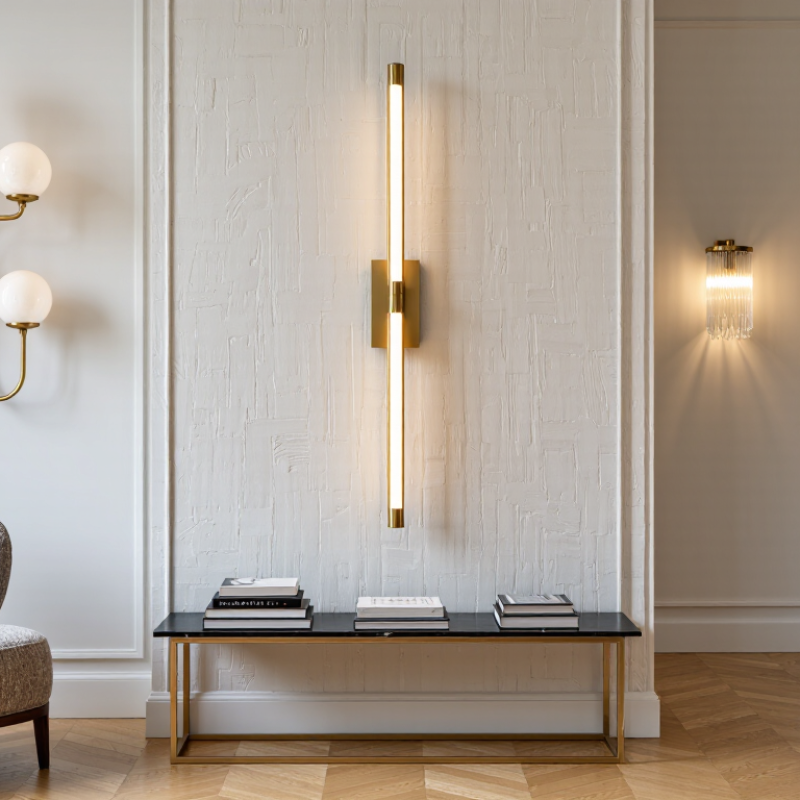
A decorative sconce is more than a small light fixed beside a doorway or bed. Its shape, finish, and visible details contribute to a room’s character even when the light is off. In 2026, a well-designed sconce balances this visual presence with useful ambient or task lighting. Picture a curved metal arm casting a soft oval across plaster, or a fluted glass shade warming a narrow hallway. The fixture should feel intentional, not merely ornate. Its scale matters, too: an oversized shade can crowd a bedside table, while a tiny fixture may disappear on a broad wall.
Tips: Check the sconce from both near and far. Look for a comfortable light level, easy-to-clean surfaces, and a shade that controls glare. For reading, confirm that the beam reaches the page without shining directly into your eyes.
Materials and construction help define quality, but appearance alone is not enough. A decorative sconce should suit the room’s existing textures and provide light where people actually need it. Consider whether its finish works with nearby hardware, and whether its bulb or integrated light source can be maintained over time. Some sculptural designs look striking in a showroom but feel too dominant at home. That is easy to overlook. A little restraint often makes the detail more convincing.
Sculptural sconces are a strong choice for 2026, especially shapes inspired by petals, branches, or folded paper. Their curved silhouettes add interest to plain walls without needing extra artwork. Look for finishes that reveal texture, such as brushed brass, dark bronze, or softly painted ceramic. Keep the form simple when the room already has patterned wallpaper or busy furniture.
Pleated fabric shades and opal glass are also standing out. A small pleated shade can soften a reading nook, while a rounded opal globe gives a hallway an even, gentle glow. A warm, quiet glow. For bedside use, check that the light source is shielded and the switch is easy to reach. Beside a mirror, place sconces at face height when possible; light from both sides tends to reduce harsh shadows.
Vintage-inspired designs feel current when paired with restrained details, such as a slim stem and a compact glass shade. Mixed-metal finishes can work, but repeating one metal elsewhere helps the room feel intentional. Not every sculptural fixture earns its space; some look striking online but cast awkward shadows in person. It is a small flaw in trend-led shopping: appearance can win over comfort. Check the bulb type, shade dimensions, and wall-box position before choosing.
Standout decorative sconce styles this year, compared by editorial prominence.
The 1–5 scores are a qualitative editorial assessment, not sales figures or survey results. Sculptural forms, vintage-inspired details, and natural materials offer distinct directions for a considered lighting scheme.
In 2026, decorative sconces feel most convincing when their materials suit the room, not just the trend. Brushed brass adds warmth beside cream plaster, while blackened steel creates crisp contrast against pale tile. Ceramic and hand-finished glass bring subtle variation. Tiny bubbles or uneven glaze can make a fixture feel less showroom-perfect. That irregularity is appealing, though it may not suit every space.
Tips: Match the finish to nearby hardware, but do not insist on an exact match. Test a sample under evening lighting. Polished metal can reflect bulbs sharply, while matte finishes tend to hide fingerprints. Check that the shade softens glare at eye level.
Natural stone, aged bronze, and textured glass also suit sculptural designs. Their surfaces shift as daylight fades, adding depth to a hallway or bedside wall. Consider upkeep before choosing: openwork metal catches dust, and porous stone may show marks. A finish that looks beautiful in a catalog can feel too cold at home. Bring samples into the room if possible. Sometimes the first choice needs reconsidering.
Decorative sconces in 2026 are being reshaped by compact LED technology. Small light sources fit slimmer arms and shaded forms, while using less energy than comparable incandescent lamps. That gives designers more freedom with proportion. It also makes the quality of the light especially important.
Tunable-white LEDs can shift from warm evening light to a cooler tone for practical tasks. Dimming helps set the mood, but the LED driver and dimmer must be compatible to avoid flicker or an uneven low setting. Check the product specifications before installation. Some connected sconces also support app or voice control, letting users adjust brightness without reaching for a wall switch. Useful, though not essential.
Sensors are changing where sconces make sense. Motion detection can light a hallway or stair landing as someone approaches, while daylight sensing may reduce output near a bright window. Good placement matters; a sensor facing a busy room can trigger too often. Optics are improving, too: diffusers and carefully aimed lenses can soften glare and direct light onto a reading chair or wall. Yet integrated LEDs may be harder to replace than standard bulbs. That trade-off deserves a closer look before choosing a fixture.
| Category | Design or Technology | Typical Features | Good Fit | Practical Considerations |
|---|---|---|---|---|
| Decorative style | Sculptural and organic forms | Curved silhouettes, textured surfaces, and indirect or diffused light make the fixture a visible design feature. | Living rooms, bedrooms, and feature walls | Check how far the fixture projects from the wall, especially in narrow passages. |
| Decorative style | Minimalist linear sconces | Simple vertical or horizontal forms often distribute light along a wall rather than focusing it on a small area. | Hallways, bathrooms, and contemporary interiors | Review the fixture’s light direction and mounting dimensions before choosing its position. |
| Decorative style | Glass and layered-light designs | Clear, frosted, or textured shades alter the appearance and spread of light; some designs combine ambient and accent lighting. | Entryways, bedside areas, and decorative focal points | Clear shades can make the lamp more visible, so consider glare and the bulb’s appearance. |
| Lighting technology | Integrated LED light sources | LEDs use a semiconductor light source and generally consume less electricity than incandescent lamps for comparable light output. | New installations and fixtures designed around a specific light shape | Check the rated lifetime, replaceability, warranty, and whether the light source is integrated or uses a replaceable lamp. |
| Lighting technology | Tunable white and dimming | Some fixtures allow users to adjust brightness and, when specified, shift the color temperature from warmer to cooler white. | Bedrooms, living spaces, and rooms used for different activities | Confirm that the fixture, dimmer, and control method are compatible; dimming capability is not universal. |
| Lighting technology | Smart controls | Depending on the model, controls may use an app, wireless network, voice assistant, or smart-home protocol for scheduling and adjustment. | Rooms where lighting scenes or remote control are useful | Verify the required hub, network, protocol support, and operation during an internet or power outage. |
| Lighting technology | Occupancy and daylight sensing | Available sensor-equipped models can switch or adjust light in response to detected movement or ambient brightness. | Utility areas, stairways, and spaces where automatic switching is helpful | Sensor coverage and placement affect performance; check whether the sensor can be adjusted or disabled. |
| Lighting technology | Improved color rendering | Color Rendering Index (CRI) indicates how faithfully a light source renders colors compared with a reference source; some LED fixtures are specified at CRI 90 or higher. | Bathrooms, dressing areas, and spaces with artwork or colorful finishes | Compare the published CRI rating and color temperature rather than relying on appearance alone. |
Features vary by fixture. Check the product specifications, installation requirements, and local electrical codes before purchase or installation.
What Are the Top Decorative Sconces for 2026?
How Can You Choose the Right Decorative Sconce for a Space?
Choose a decorative sconce for its purpose before settling on its finish. Beside a mirror, look for even light that does not cast strong shadows across the face. In a hallway, a covered shade can reduce glare at eye level. Measure how far the fixture projects; a deep arm may feel intrusive in a narrow passage. Scale matters. Before buying, tape the fixture’s outline to the wall to check its size and position. For reading, place the light near your seated shoulder and make sure the bulb is not visible from your chair.
Consider brightness, color, and control, too. The U.S. Department of Energy’s Energy Saver guidance says LED bulbs use at least 75% less energy than incandescent bulbs. They can also last up to 25 times longer. Check that the sconce accepts an LED and that its dimmer is compatible. A warm 2700–3000 K tone often feels comfortable in bedrooms and living rooms, but nearby finishes can change how the light looks. Test a bulb after dark if possible. Even careful measuring can miss something: light that looks gentle on a sample wall may feel harsh beside a glossy mirror.
