Top 10 Steel Pipe Making Machine Manufacturers Worldwide
A Steel Pipe Making Machine does more than join metal. It shapes production speed, weld consistency, dimensional accuracy, and operating costs. Choosing a manufacturer, therefore, means looking beyond a polished brochure. Buyers need to understand the full line: coil handling, forming stands, high-frequency welding, sizing, cutting, and control systems. Small details matter. A poorly matched forming section can create recurring adjustments and scrap.
Manufacturing quality expert W. Edwards Deming offered a useful principle: “It is not enough to do your best; you must know what to do, and then do your best.” His words are not specific to pipe mills, but they fit equipment selection well. A sound decision starts with clear requirements: pipe diameter, wall thickness, steel grade, target output, available floor space, and local service support. Ask manufacturers for technical specifications, commissioning plans, operator training, and references for comparable installations. A fast line is not automatically a reliable one.
This guide introduces ten Steel Pipe Making Machine manufacturers serving markets worldwide. It considers product range, engineering capability, automation, service, and suitability for different production needs. No ranking can capture every buyer’s situation. That is an imperfect shortcut. A smaller supplier may fit a focused project better than a global brand, while an impressive production speed may depend on conditions that do not match your plant. Treat each entry as a starting point, then verify claims against your own product mix and operating priorities.
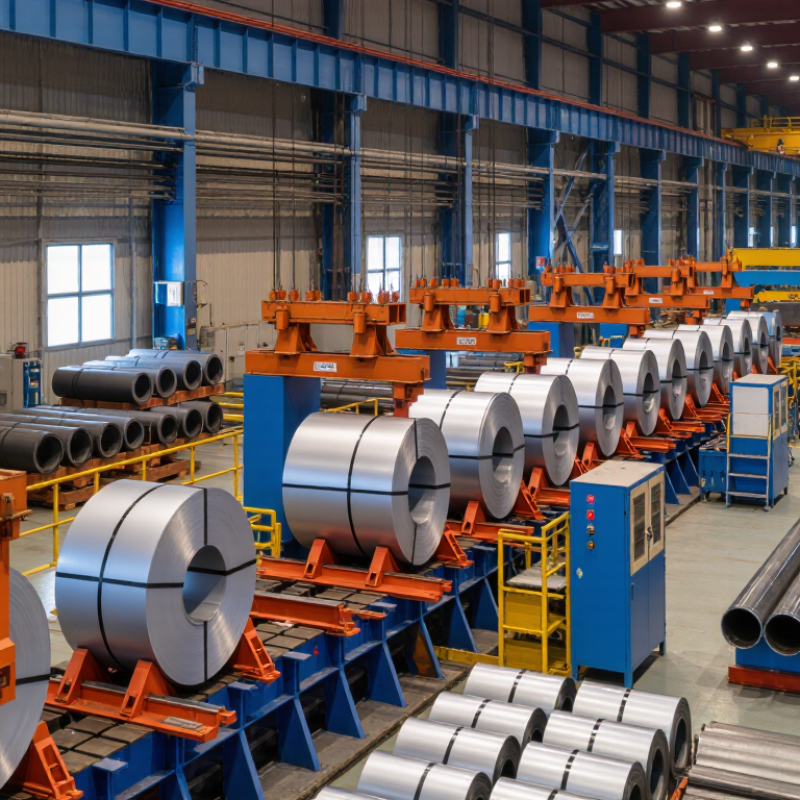
Steel Pipe Making Machines: Definition, Applications, and Scope
Steel pipe making machines convert flat steel strip or billets into pipes with controlled dimensions. A welded-pipe line typically feeds a coil through rollers, gradually forms it into a tube, then joins the edges. Sizing stands adjust the diameter, while a flying saw cuts the pipe to length. Seamless pipe uses a different route, involving heated billets, piercing, and rolling. The distinction matters.
These machines serve construction, water distribution, agricultural equipment, furniture, and energy infrastructure. A workshop may produce narrow tubes for frames; a large mill may make heavier pipe for long-distance service. Production lines can include forming stands, welding equipment, cooling sections, straighteners, and inspection stations. Sensors monitor factors such as weld temperature and pipe dimensions. Small deviations can create scrap.
The scope of a machine depends on material grade, wall thickness, diameter range, and expected output. Buyers should check changeover time, tooling requirements, maintenance access, and the quality checks built into the line. A fast line is not automatically a good fit. Floor space and operator skill matter too.
Even a carefully specified setup may need adjustment after real production begins; that practical uncertainty is easy to underestimate.
Core Technologies Used in Modern Steel Pipe Production
Modern steel pipe production depends on coordinated forming, welding, and inspection technologies. In an electric-resistance-welded line, steel coil passes through roll stands that gradually shape it into a tube. The edges meet at a controlled angle. High-frequency current heats them, and pressure joins the seam without added filler metal. The process is fast, but setup matters: worn rolls or uneven strip edges can affect roundness and weld quality.
After welding, sizing rolls correct the pipe’s diameter, while cutting systems produce set lengths. Sensors can track the seam and flag changes in temperature or alignment. Ultrasonic or other nondestructive testing checks for flaws that may not be visible on the surface. Hydrostatic testing may also be used when the product specification calls for it. Details vary.
Automation improves repeatability, not perfection. A clean sensor reading cannot compensate for poor calibration, and operators still need to interpret alarms in context. Small shifts matter. Production data can help trace defects to a specific coil or process stage, though inconsistent record-keeping weakens that benefit. The technology is impressive, but maintenance and sound process control remain less glamorous—and just as important.
Core Technologies in Modern Steel Pipe Production
Representative temperature ranges for key stages in hot-worked steel pipe production.
Temperatures are approximate and vary with steel grade, equipment, and operating practice. This chart illustrates hot-worked production stages; ERW pipe uses a different forming and welding route.
Criteria for Comparing Manufacturers Worldwide
Comparing steel pipe machine manufacturers requires more than checking advertised line speed. Define the intended pipe diameter, wall thickness, steel grade, and annual output first. Then request a production trial using the same material and specifications from every supplier. Measure dimensional tolerance, weld consistency, scrap rate, and changeover time. Small differences matter. A line that runs quickly but needs frequent adjustment may deliver less usable output. World Steel Association data puts global crude steel production at about 1.88 billion tonnes in 2024, underscoring the scale and variety of steel processing needs.
Assess engineering quality alongside service capacity. Ask for documented uptime, commissioning schedules, operator training, spare-parts lead times, and references from plants with comparable products. Check whether controls record alarms and process settings; these details help teams diagnose faults instead of guessing. Energy use deserves attention, too. The International Energy Agency’s Iron and Steel Technology Roadmap (2020) estimates that steel production accounts for around 8% of global final energy demand. This is sector-level context, not a machine-efficiency benchmark, so compare measured energy per tonne under matched operating conditions. Review warranty exclusions and lifecycle costs, not just purchase price. No scorecard is perfect. Weight each criterion against your actual production mix, and verify supplier claims through trial data and customer references.
Top 10 Steel Pipe Making Machine Manufacturers Worldwide
Choosing the top 10 steel pipe making machine manufacturers worldwide requires more than comparing brochure speeds. The World Steel Association’s World Steel in Figures 2024 reports 1,892.2 million tonnes of crude steel production in 2023. This signals the scale of the steel supply base, not pipe-machine sales; the distinction matters. Buyers should compare forming range, wall-thickness capability, changeover time, weld consistency, and verified output under stated operating conditions. Small details matter.
Strong manufacturers document line configuration, mill tolerances, weld testing, and commissioning support. Ask for a production run using your actual coil grade and target diameter, then inspect weld seams and dimensional records. Compare energy use and scrap rates per tonne, not advertised speed alone. A machine running faster on paper may lose time during tooling changes or defect correction. It is easy to miss. Rankings should also consider service response, spare-part access, operator training, and references from comparable plants. Published figures can be selective, so independent acceptance tests and clear warranty terms deserve attention. I would treat any ranking cautiously, since factory conditions differ.
Key Factors Shaping the Global Steel Pipe Machinery Market
Steel pipe machinery is shaped by demand from construction, water networks, energy projects, and manufacturing. These sectors need pipes in varied diameters and wall thicknesses, so buyers increasingly value lines that can handle product changes without lengthy setup. Flexibility matters. So does consistent weld quality.
Automation is changing how mills form, weld, size, and cut pipe. Sensors can track temperature, speed, and dimensional variation as material moves through the line. This helps operators spot issues earlier, though it does not remove the need for skilled judgment. A display cannot explain every irregular seam. Maintenance teams also need practical access to spare parts and clear service support.
Energy use and operating costs influence equipment choices, especially where mills run long shifts. Buyers may compare production speed with power demand, floor space, and the cost of changing tooling. Faster is not always better. A high-output line can create bottlenecks if inspection or material handling cannot keep pace. Smaller producers may prefer modular equipment, but upgrades can still require careful planning. Some purchasing decisions overlook operator training; that is an easy gap to miss. The market rewards machinery that fits real production conditions, not just impressive specifications.