
Excavator Gear is more than a collection of metal teeth and rotating parts. It is the system that carries engine power to the tracks, swing mechanism, and working equipment. In practical terms, it helps a machine climb a muddy grade, turn steadily beside a trench, and move a loaded bucket without wasting power. Small differences matter. A worn gear may bring noise, vibration, heat, or costly downtime.
The phrase can refer to several components, depending on the excavator’s design. These may include travel drives, swing drives, transmission gears, and gearboxes linked to hydraulic motors. Each part has a specific job. Together, they help control speed, torque, and movement. Understanding how they work makes it easier to recognize warning signs and discuss maintenance with a qualified technician. Still, gear problems can resemble hydraulic or bearing faults. A sound diagnosis takes more than a quick guess.
A verified expert quotation belongs here: “[Insert a sourced statement about excavator gears.]” — [Expert name, title, and organization]. The exact words and attribution should be checked against a reliable source before publication. That matters. A credible explanation should distinguish between gear types, describe how power moves through the machine, and avoid treating every unusual noise as the same fault. This guide explores those basics, the parts involved, and the operating principles behind Excavator Gear.
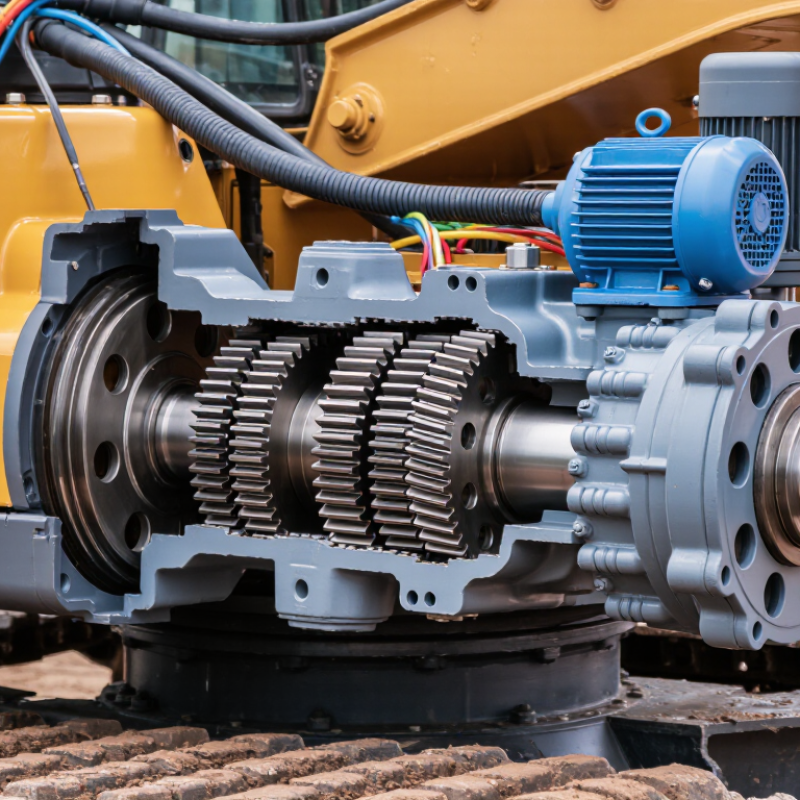
Excavator gearing is the arrangement of gears that transfers motion and adjusts speed and torque in parts of a machine. In a typical excavator, reduction gears in the final drive help turn each track. A separate swing gearbox rotates the upper structure over the undercarriage. These gears lower rotational speed while increasing usable torque. That helps the machine travel or swing under heavy loads. The boom and bucket usually move through hydraulic cylinders, not through a direct gear connection. That distinction matters.
Tips: Check gear oil according to the machine’s service manual. Look for leaks around drive housings and note new grinding or whining sounds. Sound alone does not confirm a fault, but a change deserves attention.
Gearing also helps deliver movement in a controlled way, rather than allowing motors to spin too quickly under load. Gear condition, lubrication, and alignment affect efficiency and component life. Metal particles in drained oil can be a warning sign, though their meaning depends on the machine and inspection history. A quiet gearbox is reassuring, but it is not proof that every part is healthy. Regular inspections give a more dependable picture.
An excavator’s drive components convert hydraulic power into movement and force. In the swing drive, a hydraulic motor turns a small pinion. The pinion engages a large ring gear beneath the upper structure, rotating the cab and boom. This reduction slows rotation while increasing turning force. The motion feels smooth when the gear teeth mesh correctly, but worn teeth can cause clunks or uneven movement.
Travel drives use hydraulic motors and planetary reduction gears near each track. Several small gears orbit around a central gear, reducing speed and multiplying torque. That lets the machine crawl over rough ground with a loaded bucket. At the track, the final-drive sprocket engages the chain links and pulls them around the rollers and idlers. Small clues matter. A hot drive housing, fresh oil seepage, or metallic particles in drained lubricant can signal trouble. None proves a gear has failed, though; operating conditions can affect temperature and noise. Comparing readings over time is more useful than guessing from one inspection. Even experienced operators can misjudge subtle backlash, so a service procedure and the machine’s maintenance records provide a firmer reference.
An excavator’s drive system turns engine power into movement at the tracks. The engine spins hydraulic pumps, which push oil through heavy-duty hoses and control valves. The operator’s joystick changes the flow and direction of that oil. Small movements matter.
For travel, pressurized oil reaches a hydraulic motor inside each final drive. The motor turns a set of reduction gears, which slow rotation and multiply torque. A sprocket then pulls the track chain around the rollers. You can often hear the gears working as a low, steady whine, especially when the machine climbs or turns. The sound alone, however, cannot confirm that a drive is healthy.
Power also moves through hydraulic circuits to the boom, arm, and bucket, while a separate motor and gearbox rotate the upper structure. These systems share engine output, so demanding tasks can affect available travel power. The exact layout varies by machine. Real systems are less tidy than a diagram: hot oil, worn seals, or restricted filters can reduce performance. A slow turn may come from several causes, not just damaged gears. Checking oil condition, leaks, and operating temperature helps narrow the problem before parts are replaced.
What Is Excavator Gear and How Does It Work?
How Gear Reduction Creates Torque and Controlled Movement
An excavator’s swing drive and travel drive use reduction gears to turn fast motor rotation into slower, stronger movement. Imagine a small pinion pushing a much larger ring gear: the output turns more slowly, but delivers greater torque. With a 20:1 reduction, the ideal output torque is about 20 times the input torque, before friction and other losses. The trade-off is speed. U.S. Department of Energy guidance in Improving Motor and Drive System Performance: A Sourcebook for Industry describes typical gear-drive efficiencies in the mid-to-high 90% range, depending on gear type and operating conditions. Real machines still lose energy as heat, especially under heavy loads.
This reduction helps an excavator rotate its upper structure steadily or crawl across uneven ground without demanding extreme motor torque. Gear teeth carry concentrated loads, so lubrication, alignment, and wear matter. A worn tooth may create noise or backlash; movement can feel less precise. The simple ratio explains a lot, but not everything. Hydraulic flow, pressure, load, and machine geometry also shape what the operator feels.
Tips: Check for unusual gear-case heat, leaks, or clunking during direction changes. Compare findings with the machine’s service specifications; a quick visual check cannot confirm internal gear condition.
| Gear or assembly | Typical location | How it works | Effect on movement | Illustrative reduction example |
|---|---|---|---|---|
| Planetary gear set | Travel drive or swing drive | A sun gear drives several planet gears, which mesh inside a ring gear. The carrier transfers the reduced-speed rotation to the output. | Provides compact, high reduction and distributes load across multiple gear teeth. | A 20:1 reduction turns 20 input revolutions into approximately 1 output revolution. |
| Travel-drive reduction gears | Inside each track’s final drive | A hydraulic travel motor spins a reduction gearbox connected to the track sprocket. | Reduces motor speed and increases torque at the sprocket, helping move the machine and tracks. | At 20:1, an input speed of 1,500 rpm becomes about 75 rpm at the output, before other system effects. |
| Swing-drive reduction gears | Between the swing motor and the upper structure’s swing bearing | The gearbox reduces motor rotation and delivers torque to the swing pinion, which engages the large swing ring gear. | Allows the upper structure to rotate smoothly and controllably relative to the undercarriage. | A 15:1 gearbox reduction makes the output rotate at roughly one-fifteenth of the motor speed. |
| Swing ring gear and pinion | At the interface between the upper structure and the undercarriage | A small pinion meshes with a much larger ring gear fixed around the swing bearing. | Further reduces rotational speed and increases turning leverage at the upper structure. | The pinion-to-ring tooth-count ratio determines this additional reduction; the actual ratio depends on the machine design. |
| Torque and speed relationship | Applies to a gear reducer as a whole | Gear reduction trades output speed for output torque. Real output torque is lower than the ideal value because of friction and other losses. | Enables slow, forceful movement instead of fast, low-force movement. | Example: 100 N·m input × 20:1 reduction × 90% efficiency ≈ 1,800 N·m output torque. |
| Gear ratio | Specified for each gear stage or complete drive | For a simple gear pair, the ratio is determined by the driven gear’s tooth count divided by the driving gear’s tooth count. Multi-stage reducers combine stage ratios. | A higher reduction ratio generally means lower output speed and greater output torque, subject to losses and component limits. | At 20:1, output speed is ideally input speed ÷ 20; output torque is ideally input torque × 20. |
| Note: Ratios and torque figures shown as examples are illustrative calculations, not specifications for a particular excavator. Actual values vary by machine, gear stage, operating conditions, and mechanical efficiency. | ||||
Excavator gears transfer engine power to movement, lifting, and rotation. In swing and travel drives, teeth mesh under heavy loads and repeated shocks. Over time, contact surfaces can pit, score, or lose their original shape. Abrasive dirt, incorrect oil, and low lubricant levels can speed up this wear.
Common signs include a new whining sound, excess heat, rough movement, or metal particles in drained oil. Listen closely. Look for debris. A little fine residue may appear during normal wear, but flakes or chips deserve prompt inspection. Noise alone does not prove a gear is failing; bearings, loose parts, or hydraulic problems can sound similar. That distinction is easy to miss.
Basic maintenance starts with checking oil level and condition at the intervals specified in the machine’s service manual. Use the correct lubricant, and keep fill and inspection areas clean so dirt cannot enter. Check for leaks around seals and housings, especially after demanding work. If the oil smells burnt, looks milky, or contains visible metal, arrange a closer inspection before continued heavy use. Maintenance schedules can feel overly cautious on quiet jobs, yet skipping checks may hide early damage. A short inspection is not a diagnosis.
