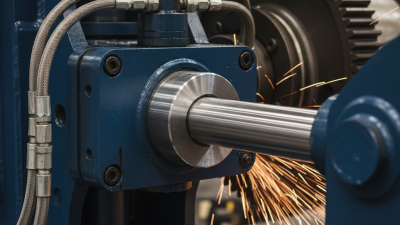
Pneumatic Motor technology remains important in factories where compact power, fast response, and safe operation matter. Food-processing lines, packaging machines, mining equipment, and marine systems often choose air motors for their resistance to overload, heat, and explosive environments. The sound is familiar: a sharp air hiss, followed by steady shaft rotation.
Market evidence supports this continuing demand. Grand View Research places the global industrial automation market at approximately USD 191.5 billion in 2023, with automation investment expanding across manufacturing and logistics. MarketsandMarkets also identifies pneumatic systems as a durable part of industrial motion control, especially where simple maintenance and flexible installation are required. However, published studies use different definitions. Some measure pneumatic equipment, while others separate motors, actuators, valves, and compressors. Direct comparisons can therefore mislead buyers.
Gottlieb Stoll, founder of Festo, is widely associated with the view that “Pneumatics is simple, robust, and reliable.” That description remains useful, although it is not complete. Efficiency depends heavily on air leakage, pressure stability, lubrication, duty cycle, and motor sizing. A low purchase price may become expensive beside a poorly maintained compressor.
This guide examines China’s top 10 Pneumatic Motor manufacturers for global buyers. It considers product range, torque performance, materials, certifications, customization, export experience, and after-sales support. Factory visits, technical sheets, and application feedback matter more than polished catalog images. Some rankings remain subjective. That is worth acknowledging. The best supplier is not always the largest one; it is the manufacturer that fits the machine, operating environment, and service expectations.
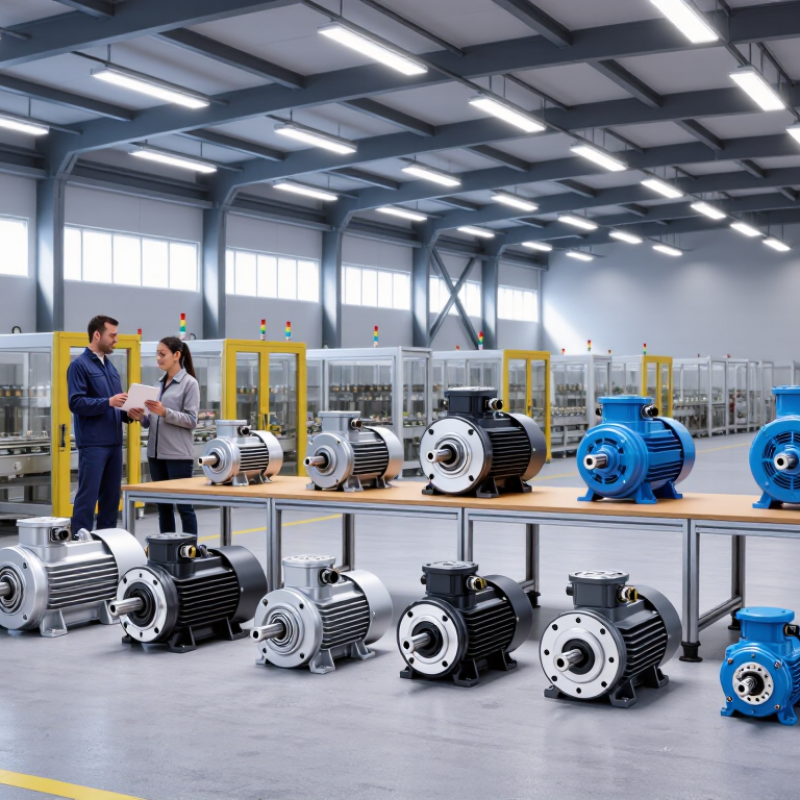
A pneumatic motor converts compressed air into rotary motion. Unlike an electric motor, it can operate safely in wet, dusty, or explosive-risk industrial areas when properly specified. Common designs include vane, piston, and turbine motors. Each suits different workloads, speeds, and torque requirements.
Chinese manufacturers attract global buyers through broad production capacity, competitive pricing, and flexible engineering support. Many factories produce customized shaft sizes, mounting patterns, air connections, and speed controls. Some also provide performance testing, material reports, and ISO 9001-based quality systems. These details matter when a motor runs continuously beside a conveyor or inside a compact assembly machine.
A careful buyer should request torque curves, air consumption data, noise levels, and service-life expectations. Ask how each unit is tested before shipment. Factory audits can reveal calibration practices, cleanliness, and spare-parts control. Compliance documents should match the destination market and actual product configuration.
The decision is not always simple. A low quotation may hide higher air consumption or inconsistent machining. That cost appears later in compressor demand and maintenance time. I would compare total operating cost, not only the purchase price. Still, supplier claims require verification. Sample testing under real load often exposes vibration, heat, or speed variation that brochures omit. Clear drawings and written inspection criteria reduce avoidable disputes.
The selection begins with verifiable manufacturing experience, not online visibility. We examine production history, engineering staff, factory capacity, and export records. A supplier should explain torque, speed, air consumption, and operating pressure clearly. Vague specifications create costly problems during installation.
Product quality receives practical testing. We review material choices, machining accuracy, sealing performance, noise levels, and temperature behavior. Sample motors should run under different loads, including repeated starts and sudden stops. Independent certificates are useful, but they do not replace test records or factory evidence. We also check whether drawings, manuals, and inspection reports match the delivered product.
Communication matters greatly. Technical replies should arrive quickly and answer the actual question. Spare parts availability, packaging strength, lead times, and warranty handling are assessed through documented cases. Factory visits or live video inspections can reveal assembly details that photographs hide. That said, supplier information is not always complete. Some records may be translated poorly or updated slowly. No ranking is perfect. Our assessment therefore combines documents, sample performance, customer feedback, and direct technical discussion.
Cost is considered after reliability, not before it. A low quotation may exclude testing, fittings, or after-sales support. We favor manufacturers that disclose limitations and adapt designs responsibly for different industrial environments. Their products must also align with applicable safety and trade requirements in the buyer’s market.
These profiles examine ten leading Chinese pneumatic motor manufacturers through practical buying criteria. Their products commonly serve conveyors, mixers, winches, packaging lines, and material-handling equipment. Some specialize in compact vane motors, while others focus on piston designs for higher starting torque. Several factories combine casting, CNC machining, assembly, and pressure testing under one roof. That can improve consistency, but it does not guarantee every batch is flawless.
The strongest manufacturers usually provide torque curves, air-consumption data, dimensional drawings, and clear operating limits. Export experience also matters. Reliable suppliers understand documentation, packaging, communication, and after-sales support. Some maintain ISO-based quality systems and perform endurance testing before shipment. However, buyers should inspect test methods carefully. A certificate alone proves little. Factory audits, sample testing, and reference checks remain valuable. One weakness appears often: product pages may explain features better than limitations.
Tips: Match motor speed, torque, air pressure, and duty cycle with the real application. Ask for noise levels, lubrication requirements, shaft dimensions, and replacement-part availability. Request a sample before placing a large order. Confirm whether testing uses your expected air quality and temperature. Small details matter.
These ten profiles also reveal different manufacturing strengths. One producer may offer fast customization, while another provides better corrosion-resistant materials. A third may compete through stable volume production. The lowest price is not always economical. Energy use, downtime, and maintenance can change the final cost. Global buyers should compare complete operating evidence, not attractive promises.
China Top 10 Pneumatic Motor Manufacturers for Global Buyers
The leading Chinese pneumatic motor manufacturers differ mainly in product design, testing depth, and production scale. Some focus on compact vane motors for handheld tools. Others produce high-torque units for mixers, conveyors, and hazardous industrial areas. The U.S. Department of Energy reports that compressed-air systems may consume 10–15% of a factory’s electricity. Therefore, efficiency is not a minor specification. Buyers should compare air consumption, torque stability, startup performance, noise, and operating pressure under identical conditions.
Production capability also separates suppliers. Larger factories often use automated CNC machining, in-house casting, and batch leak testing. Smaller specialists may offer faster customization and lower minimum orders. However, capacity claims require evidence. Ask for inspection records, material certificates, endurance-test results, and traceable serial numbers. ISO 8573-1 air-quality requirements matter too, because moisture or oil contamination can shorten motor life. The International Organization for Standardization identifies particle, water, and oil classes as key compressed-air controls.
Technology choices reveal practical differences. Vane motors usually provide smooth operation and simple maintenance. Piston designs can deliver stronger torque at lower speeds, but they may create more vibration. Some manufacturers integrate speed-control valves, silencers, and corrosion-resistant coatings. These options affect total ownership cost. The Global Market Insights pneumatic equipment report forecasts continued market growth through the decade, yet market expansion does not guarantee equal quality.
My comparison would remain incomplete without factory audits. Catalog data can look excellent. Field performance may disagree. Testing samples from different batches is wiser than trusting one successful unit.
This benchmark compares the typical engineering envelope of pneumatic motor technologies commonly offered by Chinese manufacturers. Values represent practical industry ranges from published pneumatic motor specifications rather than individual company or brand data.
Vane motors are widely used because of their compact design and high speed. Piston motors generally provide higher torque and better efficiency for demanding loads. Gear motors offer strong low-speed torque and robust continuous operation, while turbine motors are selected mainly for extremely high rotational speed with relatively low torque. Global buyers should also compare material traceability, CNC machining capacity, automated testing, sealing technology, quality-system certification, and export-support capability.
Global buyers should evaluate pneumatic motor suppliers by technical evidence, not attractive catalog images. Define required torque, speed, air pressure, rotation direction, duty cycle, and installation space before contacting manufacturers. A motor rated at 6 bar may perform differently when the factory air line drops to 5 bar.
Ask each Chinese manufacturer for performance curves, air consumption data, dimensional drawings, material specifications, and test records. Confirm whether results were measured under stable laboratory conditions or normal production conditions. Check the motor’s housing, shaft, bearings, seals, and corrosion resistance for your working environment. Dust, moisture, chemicals, and frequent reversing can change the selection.
Request a sample for practical testing. Measure starting torque, running speed, noise, temperature, and air use with your own equipment. Small differences matter. Review quality controls, traceability, warranty terms, spare parts access, packaging, and lead times. A remote factory audit can reveal useful details, but it cannot replace independent inspection. Also verify export documents, payment conditions, delivery terms, and applicable safety requirements in the destination market. Do not rely on one quotation. Comparing three or four technically equivalent offers often exposes unclear specifications. Some purchasing decisions still fail because engineers and buyers use different definitions of “rated performance.” Confirm every critical value in writing before placing an order.
| Rank | Supplier Profile | Primary Motor Type | Typical Output Range | Typical Speed Range | Operating Pressure | Air Consumption | Common Port Sizes | Typical Applications | Quality & Compliance Evidence | Typical Lead Time | Buyer Evaluation |
|---|---|---|---|---|---|---|---|---|---|---|---|
| 1 | Manufacturer Profile 01 | Vane motor | 0.12–15 kW | 500–24,000 rpm | 4–7 bar | 0.15–2.80 m³/min | G1/4–G1 | Light industrial tools, conveyors, mixers, and general machinery | ISO 9001 system, dimensional inspection, pressure testing, and material traceability | 3–6 weeks for standard models | ★★★★★ Strong all-round option |
| 2 | Manufacturer Profile 02 | Piston motor | 0.30–22 kW | 300–6,000 rpm | 4–7 bar | 0.25–3.50 m³/min | G3/8–G1 | High-torque drives, winches, hoists, and heavy-duty equipment | ISO 9001 system, load testing, torque verification, and production inspection records | 4–8 weeks for standard models | ★★★★★ Best for high torque |
| 3 | Manufacturer Profile 03 | Gerotor motor | 0.08–8 kW | 100–3,000 rpm | 3–7 bar | 0.10–1.80 m³/min | G1/4–G3/4 | Compact automation systems, indexing units, and low-speed drives | ISO 9001 system, endurance testing, leakage inspection, and batch quality records | 3–7 weeks for standard models | ★★★★☆ Good compact-drive selection |
| 4 | Manufacturer Profile 04 | Vane motor | 0.20–18 kW | 400–20,000 rpm | 4–6.3 bar | 0.20–3.20 m³/min | G1/4–G1 | Food-processing machinery, packaging lines, and clean production areas | ISO 9001 system, stainless-steel options, washdown design review, and test certificates | 4–8 weeks for standard models | ★★★★☆ Suitable for hygienic environments |
| 5 | Manufacturer Profile 05 | Piston motor | 0.50–30 kW | 200–5,000 rpm | 4–7 bar | 0.35–4.20 m³/min | G1/2–G1 1/4 | Marine equipment, drilling auxiliaries, lifting systems, and rugged machinery | ISO 9001 system, vibration testing, overload testing, and corrosion-control procedures | 5–10 weeks for standard models | ★★★★☆ Strong heavy-duty capability |
| 6 | Manufacturer Profile 06 | Vane motor | 0.10–10 kW | 600–25,000 rpm | 4–7 bar | 0.12–2.20 m³/min | G1/8–G3/4 | Assembly tools, polishing equipment, laboratory machinery, and compact drives | ISO 9001 system, speed calibration, runout inspection, and noise testing | 2–5 weeks for standard models | ★★★★☆ Good for compact high-speed systems |
| 7 | Manufacturer Profile 07 | Radial piston motor | 1.00–45 kW | 80–2,500 rpm | 4–7 bar | 0.60–6.00 m³/min | G1/2–G1 1/2 | Winches, bulk-material handling, actuators, and high-load machinery | ISO 9001 system, rated-load testing, fatigue testing, and shaft-seal inspection | 6–12 weeks for standard models | ★★★★☆ Best suited to high-load applications |
| 8 | Manufacturer Profile 08 | Vane motor | 0.15–12 kW | 700–18,000 rpm | 4–6 bar | 0.16–2.50 m³/min | G1/4–G3/4 | Textile machinery, printing equipment, machine tools, and general automation | ISO 9001 system, balance testing, performance curves, and incoming-material inspection | 3–6 weeks for standard models | ★★★☆☆ Balanced price-to-performance profile |
| 9 | Manufacturer Profile 09 | Piston motor | 0.25–20 kW | 250–7,500 rpm | 4–7 bar | 0.22–3.20 m³/min | G3/8–G1 | Mining auxiliaries, construction machinery, pumps, and intermittent-duty systems | ISO 9001 system, environmental testing, torque testing, and spare-parts documentation | 5–9 weeks for standard models | ★★★☆☆ Flexible for customized projects |
| 10 | Manufacturer Profile 10 | Gerotor motor | 0.05–6 kW | 80–2,000 rpm | 3–6 bar | 0.08–1.40 m³/min | G1/8–G1/2 | Small conveyors, medical equipment, laboratory devices, and OEM assemblies | ISO 9001 system, leakage testing, dimensional inspection, and OEM documentation support | 2–6 weeks for standard models | ★★★☆☆ Practical choice for low-power OEM systems |
| Evaluation note: Performance figures are typical industry ranges for pneumatic motors and should be confirmed against the supplier's official datasheet, test conditions, duty cycle, ambient temperature, air quality requirements, certification scope, and delivery quotation before purchase. | |||||||||||