A Hydraulic Cylinder Pump must match the cylinder, operating cycle, and working environment—not just a catalogue specification. A unit that looks suitable on paper may struggle when oil temperature rises or a machine runs through repeated, demanding cycles. Bore size, stroke, required pressure, flow rate, mounting space, and seal compatibility all deserve careful checks. Small details matter.
A useful engineering principle often attributed to Lord Kelvin is, “If you cannot measure it, you cannot improve it.” For buyers, that means asking manufacturers for verifiable performance data, test procedures, material details, and clear maintenance guidance. Kelvin was an engineering pioneer, not a hydraulic-pump specialist, but the principle fits equipment evaluation well.
This guide examines ten manufacturers associated with Hydraulic Cylinder Pump products and related hydraulic equipment. It considers product range, customization, manufacturing capabilities, quality controls, technical support, and evidence behind performance claims. A polished website is not proof of consistent production. Request drawings, pressure ratings, inspection records, and references for comparable applications. Also check how the supplier handles spare parts and service after delivery.
The list is a starting point, not a universal verdict. Needs vary between a compact agricultural machine, a factory press, and mobile construction equipment. Even a credible manufacturer may not suit every duty cycle or budget. That is worth admitting. Compare specifications against your actual operating conditions, and confirm critical details directly with the supplier before making a decision.
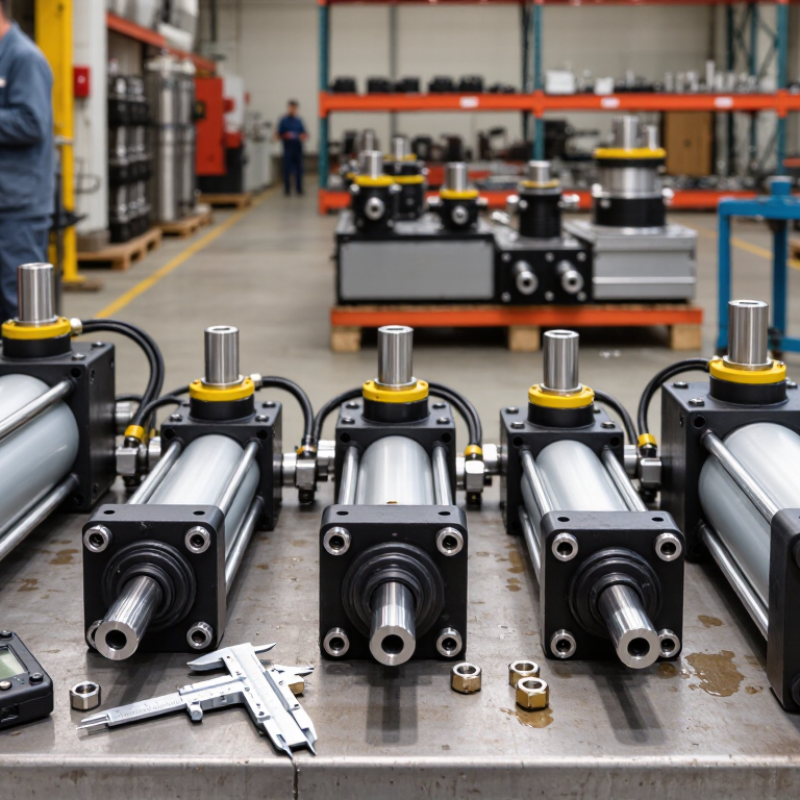
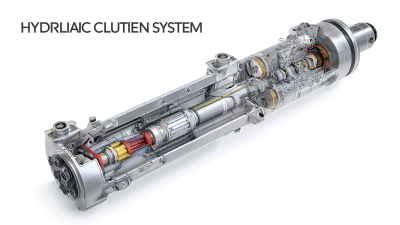
Hydraulic cylinder pump systems turn mechanical input into controlled linear force. The pump moves hydraulic fluid, while pressure rises as the cylinder meets a load. Pump flow largely affects cylinder speed; bore diameter and operating pressure influence its force. On an excavator, this combination raises a loaded boom. In a factory press, it applies steady force during a short stroke. Small details matter.
Demand reflects these varied uses. Grand View Research’s Hydraulic Cylinder Market report estimates the global market at USD 15.26 billion in 2023, with a projected 4.3% compound annual growth rate from 2024 to 2030. That figure describes cylinders, not pump sales, so the distinction matters when comparing market data.
In practice, selection also depends on duty cycle, fluid cleanliness, temperature, and available installation space. A compact pump may fit a mobile machine but run hot during repeated cycles. A neat catalogue rating is not the whole story. Engineers should check real operating conditions, including peak loads and cycle frequency, before specifying a system.
China’s hydraulic pump manufacturing industry has grown alongside construction, agriculture, factory automation, and other equipment sectors. Its strength is a dense supply network for castings, steel tubes, seals, and precision-machined parts. That can shorten sourcing time and make product customization more practical. Details matter. A cylinder barrel still needs consistent honing, while pump components need accurate clearances to limit wear and fluid loss.
Manufacturers may differ considerably in equipment, process control, and testing depth. A capable supplier should be able to explain material selection, machining tolerances, surface treatment, and inspection records in clear terms. Pressure, leakage, temperature, and endurance tests can reveal different weaknesses. One test is not enough. Buyers should also check whether test conditions resemble the intended operating environment, including fluid type, duty cycle, and temperature changes.
Production capacity is only part of the picture. Stable results depend on trained operators, calibrated instruments, clean assembly areas, and traceable quality checks. A detailed drawing helps, but it cannot prevent every mismatch between a prototype and a production run. That sounds tidy on paper; shop-floor results can be less tidy. Clear specifications and sample validation reduce uncertainty, though they require time from both sides. For overseas purchasers, communication about tolerances, delivery schedules, and after-sales support can be as important as the quoted price.
A credible ranking of Chinese hydraulic cylinder pump manufacturers should begin with product performance, not catalog size. Reviewers can examine rated pressure, flow stability, leakage control, and operating temperature range. Test records matter. Useful evidence includes pressure-cycle results, inspection reports, and clear explanations of test conditions. A large number without context proves little.
Manufacturing capability deserves close attention. Check whether machining tolerances are documented and whether key parts, such as piston rods and seals, receive consistent inspection. Traceability from material batches to finished units can help buyers investigate defects. Service is practical evidence, too: assess response times, spare-parts availability, technical drawings, and support for installation. Short lead times sound attractive, but only when quality checks remain intact.
A fair scorecard should publish its criteria and weight verified evidence more heavily than promotional claims. It may compare product range, quality controls, customization, delivery consistency, and after-sales support. Keep the method visible. Still, rankings have limits. Public data may be incomplete, and test conditions can differ between factories. I would not treat one laboratory result as proof of long-term reliability. A second review of samples or customer feedback can reveal gaps, though that step is not always easy.
China’s hydraulic cylinder and pump sector includes specialists with very different strengths. These ten profiles are best read as capability snapshots, not a permanent ranking. Some manufacturers combine cylinder production with hydraulic power units, helping buyers coordinate pressure, flow, and mounting requirements. Others focus on standard mobile cylinders, where bore size, stroke, and pin spacing must match the machine closely.
Several profiles center on compact high-pressure units for industrial equipment; others build heavy-duty cylinders for construction or agricultural machinery. A corrosion-resistant product line may use stainless components, but seal choice still depends on fluid and operating temperature. Some factories concentrate on rods, honed tubes, or seals, while engineering-led suppliers emphasize drawings, samples, and cycle testing. Details matter. A polished catalogue alone cannot confirm service life.
The remaining profiles include OEM-oriented producers, export-focused manufacturers, and suppliers offering custom assemblies in smaller batches. Buyers can compare rated pressure, leakage checks, material specifications, and documented test methods. Ask how a factory controls bore finish and rod straightness, and request records for the actual model. One caution: pump and cylinder expertise are not interchangeable. A supplier may make one component well, yet rely on partners for the other. That distinction is easy to overlook.
Common nominal pressure ratings specified by international hydraulic cylinder standards
ISO 6020-1 and ISO 6020-2 specify a 16 MPa nominal pressure series, while ISO 6022 specifies a 25 MPa series. These standards provide technical context for manufacturer profiles; the ratings are not company-specific performance claims.
A useful comparison of the top 10 hydraulic cylinder and pump manufacturers starts with product fit, not catalogue size. Pump portfolios may include gear, vane, and axial-piston designs; cylinder ranges may cover tie-rod, welded, and telescopic types. Match each option to required pressure, flow, stroke, mounting space, and duty cycle. Small differences matter.
Capability also depends on what sits behind the product sheet. Check material specifications, seal choices, machining tolerances, endurance testing, and documented pressure ratings. Ask how the supplier handles custom ports and replacement parts. A polished catalogue is not proof of consistent field performance. Test records help.
Market context matters, too. Grand View Research estimated the global hydraulic-pump market at USD 10.68 billion in 2023 and projected a 4.8% compound annual growth rate through 2030. This signals broad demand, but it does not establish which supplier fits a specific application. Construction and agricultural machinery often prioritize compact, rugged systems; industrial presses may need stable output during long cycles. Compare delivery reach and technical support in the regions where equipment will operate. A ranking alone is not enough. Market reports offer useful context, yet their categories may not reflect a buyer’s exact cylinder-and-pump combination.
This company-name-free overview compares ten common product-led supplier categories in China’s hydraulic equipment sector. It is not a verified ranking of ten individual manufacturers; capabilities and specifications vary by supplier and model.
| No. | Product-led supplier category | Typical products | Common capabilities to compare | Typical markets and applications | Useful purchasing checks |
|---|---|---|---|---|---|
| 1 | Mobile-equipment cylinder specialists | Welded hydraulic cylinders; custom mounting configurations | Bore and stroke options, mounting design, seals, corrosion protection, and production testing | Construction machinery, agricultural equipment, and material-handling machinery | Confirm rated pressure, duty cycle, side-load limits, seal compatibility, and test documentation |
| 2 | Telescopic-cylinder specialists | Single- and multi-stage telescopic cylinders | Collapsed-length design, stage sequencing, extension length, and custom interfaces | Dump trucks, trailers, lifting equipment, and other applications needing long extension from a compact length | Check load stability, mounting geometry, retraction length, operating angle, and maintenance access |
| 3 | Industrial-cylinder specialists | Tie-rod and round-body cylinders; standard and custom cylinders | Dimensional options, seal selection, mounting styles, and interchangeability with specified standards | Factory machinery, production lines, presses, and general industrial equipment | Verify the exact standard and series, operating pressure, port details, and replacement-part availability |
| 4 | Heavy-duty cylinder specialists | Large-bore and mill-type cylinders; cylinders for demanding duty | Structural design, material selection, machining capacity, sealing, and inspection processes | Metals, mining, heavy presses, and other high-force industrial applications | Request engineering calculations, material traceability, pressure-test criteria, and service-life assumptions |
| 5 | Axial-piston-pump specialists | Variable- and fixed-displacement axial piston pumps | Displacement range, control options, pressure and speed limits, and integration with hydraulic circuits | Mobile hydraulics and industrial systems, subject to pump design and application requirements | Check the complete operating envelope, fluid requirements, control response, noise data, and approved circuit design |
| 6 | External-gear-pump specialists | Fixed-displacement external gear pumps and pump assemblies | Displacement choices, shaft and port configurations, materials, and production consistency | General-purpose power units, agricultural machinery, and mobile or industrial circuits suited to the selected model | Compare flow at operating speed, pressure limits, inlet conditions, fluid viscosity range, and rotation direction |
| 7 | Vane-pump specialists | Fixed- and variable-displacement vane pumps | Flow options, configuration, noise characteristics, and compatibility with the intended hydraulic system | Selected industrial machinery and hydraulic power systems | Review model-specific pressure, speed, fluid cleanliness, temperature limits, and performance curves |
| 8 | Radial-piston-pump specialists | Radial piston pumps for applications requiring the characteristics of this design | Pressure and speed range, control method, mounting, and application-specific engineering | Specialized industrial and high-pressure hydraulic systems, depending on the selected model | Validate continuous versus intermittent ratings, inlet conditions, duty cycle, and system-level thermal requirements |
| 9 | Hydraulic power-unit integrators | Power units combining a reservoir, pump, drive, valves, and controls as specified | System sizing, manifold design, control integration, filtration, and assembly testing | Industrial machinery, machine tools, presses, and custom hydraulic systems | Specify required flow and pressure, heat rejection, reservoir capacity, filtration, electrical supply, and documentation |
| 10 | Custom hydraulic-system suppliers | Application-specific combinations of cylinders, pumps, valves, and power units | Design support, prototyping, component sourcing, system validation, and after-sales service | OEM projects across construction, agriculture, manufacturing, and other equipment sectors | Assess engineering ownership, interface control, prototype testing, spare-parts support, and change management |